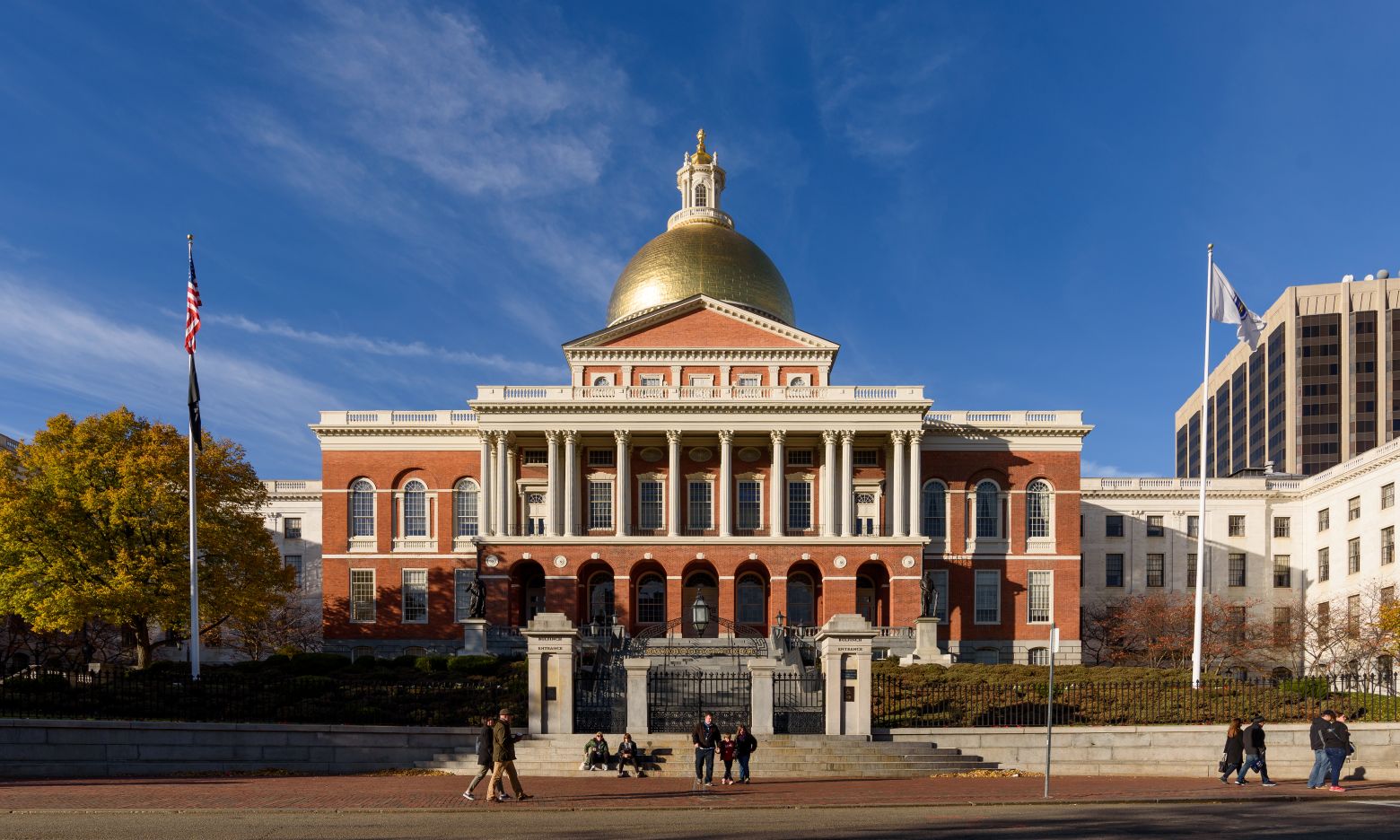
The exoneration bill has been advanced by the Joint Committee on the Judiciary and now awaits a decision by the House Committee on Ways and Means. Written testimonies to the committee should be sent to : Testimony.HWMJudiciary@mahouse.gov
Read the Revised Language of Bill H.5154
SECTION 1. The first paragraph of chapter 145 of the resolves of 1957, as amended by section 105 of chapter 126 of the acts of 2022, is hereby amended by inserting after the words “Elizabeth Johnson, Jr.”, the following words:- , Margaret Jones, Alice Lake, Elizabeth Kendall, Anne Hibbens, Goody Glover,
SECTION 2. The first paragraph of said Chapter 145 is hereby further amended by striking the words “in the year sixteen hundred and ninety-two”.
SECTION 3. Said Chapter 145 is hereby further amended by inserting after the first paragraph the following 2 paragraphs:-
Whereas, Hugh Parsons, Eunice Cole, and Elizabeth Morse were indicted, tried, and found guilty of “Witchcraft”; and
Whereas, numerous others were named, accused, arrested, questioned, imprisoned, arraigned, presented, indicted or tried for “Witchcraft” or familiarity with the Devil, though not found guilty; and
SECTION 4. The second paragraph of said Chapter 145 is hereby amended by inserting after the word “named”, the following words:- and other.
SECTION 5. The fourth paragraph of said Chapter 145 is hereby amended by inserting after the words “Elizabeth Johnson, Jr.” the following words:- , Margaret Jones, Alice Lake, Elizabeth Kendall, Anne Hibbens, Goody Glover, Hugh Parsons, Eunice Cole, Elizabeth Morse.
Between 1647 and 1688, five women were hanged for witchcraft in Boston, Massachusetts. Margaret Jones, Elizabeth Kendall, Alice Lake, Ann Hibbins, and Goody Glover were convicted in trials that denied them basic justice, subjected them to torturous examinations, and ultimately took their lives based on superstition, fear, and prejudice.
Nearly four centuries later, their names remain tainted by wrongful convictions. But that can change, and you can be part of making it happen.
What is Bill H.1927?
Bill H.1927, proposed by Rep. Steven Owens of Cambridge and Watertown, will clear the names of 8 individuals convicted of witchcraft in Boston and recognize all others who suffered witchcraft accusations in Massachusetts. This legislation represents more than clearing historical records. It’s about acknowledging injustice, honoring the memory of those who suffered, and learning from our past mistakes.
The five women who were executed in Boston have never been exonerated. While the 31 individuals convicted or pressed to death during the Salem Witchcraft Trials have been cleared by the General Court, those accused in the years before Salem have been all but forgotten.
Why These Five Women Matter
Margaret Jones (executed 1648) was a woman whose medicines were deemed too effective, her skill too powerful. When neighbors’ misfortunes occurred, she became the scapegoat. She maintained her innocence to the very end.
Elizabeth Kendall (executed between 1647 and 1651) was falsely accused by a nurse who blamed her for a child’s death, a child who had actually died from the nurse’s own negligence. Even after the nurse’s fraudulent testimony was revealed, Elizabeth was never exonerated.
Alice Lake (executed c. 1650) was a mother of four who had been judged harshly for choices she made as a young woman. That judgment haunted her and was weaponized against her when witchcraft accusations arose.
Ann Hibbins (executed 1656) was called “quarrelsome” for speaking her mind and refusing to accept unfair treatment. Her husband had been an Assistant in the Massachusetts General Court, but even her connections couldn’t save her from being targeted as a widow with property.
Goody Glover (executed 1688) was an Irish Catholic widow whose first language was Gaelic. An outsider within her community, she became an easy target when children exhibited strange behaviors.
These women were not witches. They were healers, mothers, widows, and immigrants who became victims of mass hysteria, misogyny, and injustice.
The Legislative Path Forward
The Joint Committee on the Judiciary will hold a hearing on Bill H.1927 November 25, 2025. This hearing is a critical opportunity for citizens to voice their support for exoneration and justice.
Here’s what you need to know about participating:
Written Testimony
You can submit written testimony to the Joint Committee on the Judiciary. Written statements allow you to:
Share why this legislation matters to you
Explain the historical significance of exonerating witch trial victims
Connect past injustices to ongoing witch hunts happening around the world today
Advocate for full accountability and acknowledgment
What to Include in Your Testimony
When crafting your testimony (whether oral or written), consider including:
Your connection to the issue: Are you a descendant? A Massachusetts resident? Someone who cares about justice?
Why exoneration matters: This isn’t just about history. It’s about acknowledging that innocent people suffered grave injustices and that we, as a society, commit to learning from these mistakes.
The human cost: These individuals suffered imprisonment, interrogation, loss of reputation, loss of income, separation from their families, illness, and death.
The truth about witchcraft accusations: These women did not have a diabolical pact with the devil. They were innocent people falsely accused.
Human responsibility: It was human agency that executed alleged witches, not a community deluded by the devil. People made these choices and people must take responsibility for the injustice.
The broader significance: Witch hunts didn’t end with Salem. They continue today in many parts of the world. Understanding this history helps us recognize and resist witch hunting wherever it occurs.
Request for action: Ask the committee to support H.1927 and move it forward for a full vote.
Whether you plan to testify in person or submit written comments, your voice matters. Contact the Joint Committee on the Judiciary to learn about upcoming hearing dates and registration requirements.
4. Spread the Word
Share this blog post, the petition, and information about the bill on social media. Use hashtags like #H1927, #WitchTrialJustice, and #MassachusettsHistory to amplify the message.
The patterns that led to the witch trials (scapegoating outsiders, punishing women who challenged social norms, using fear to justify injustice) are still happening in the same form today.
Around the world, people are still being accused of witchcraft. They still face violence, imprisonment, and death because of these accusations. Witch hunts never stopped. They continue in parts of Africa, Asia, and beyond, with devastating consequences for victims and their families.
At End Witch Hunts nonprofit, we know that witch hunting didn’t evolve into something else. It’s still witch hunting. People are still being beaten, burned, and killed because neighbors, family members, or community leaders accuse them of using harmful magic or witchcraft.
By formally exonerating these victims and apologizing for what was done to them, Massachusetts can demonstrate that it’s possible to confront this injustice honestly, both historically and in its ongoing, present day reality. This legislation acknowledges that real people suffered real harm in colonial Massachusetts, just as real people continue to suffer from witchcraft accusations today.
Massachusetts exonerated all those convicted during the Salem witch trials of 1692 and 1693, but left these five women behind. They remain the only people executed for witchcraft in New England who have never been cleared. It’s time to finish the job.
When we advocate for Margaret Jones, Elizabeth Kendall, Alice Lake, Ann Hibbins, and Goody Glover, we also stand with every person around the world who is being accused of witchcraft right now. Their stories are separated by centuries but united by the same persecution, the same violence, the same injustice.
The Time to Act is Now
Legislative windows can close quickly. The Massachusetts legislature needs to hear from citizens who care about justice, not just historical justice, but justice for all victims of witch hunting, past and present.
Five women hanged for witchcraft have waited nearly four centuries for their names to be cleared.
Will you be one of the voices that finally brings them justice?
Massachusetts Witch-Hunt Justice Project
A project of End Witch Hunts. For more information, volunteer opportunities, and updates on the hearing schedule, visit massachusettswitchtrials.org
The bill to exonerate those accused of witchcraft in Massachusetts has been renamed H.1927.
This legislation was proposed by Rep. Steven Owens (Cambridge and Watertown) and will clear the names of 8 individuals convicted of witchcraft in Boston and recognize all others who suffered witchcraft accusations in Massachusetts.
If you are interested in helping out, please register to volunteer here, or show your support for this legislation by signing our petition and by writing or calling your legislators. We are currently (November 2025) looking for people to submit written testimony in support of H1927, share the petition, and talk to your Massachusetts legislators about co-sponsoring the bill.
H1927 updates a 1957 resolution, which cleared the name of Ann Pudeator by adding the names of Margaret Jones, Elizabeth Kendall, Alice Lake, Hugh Parsons, Eunice Cole, Ann Hibbens, Elizabeth Morse, and Goody Glover.
There is also a clause that provides exoneration for all who were accused of witchcraft in colonial Massachusetts, whether or not they were convicted.
Amended Resolution
RESOLVE RELATIVE TO THE INDICTMENT, TRIAL, CONVICTION AND EXECUTION OF ANN PUDEATOR AND CERTAIN OTHER PERSONS FOR “WITCHCRAFT” IN THE YEAR SIXTEEN HUNDRED AND NINETY-TWO.
Whereas, Ann Pudeator, Bridget Bishop, Susannah Martin, Alice Parker, Margaret Scott, Elizabeth Johnson, Jr., Margaret Jones, Alice Lake, Elizabeth Kendall, Anne Hibbens, Goody Glover, and Wilmot Redd were indicted, tried, found guilty, and sentenced to death and executed for “Witchcraft”; and
Whereas, Hugh Parsons, Eunice Cole, and Elizabeth Morse were indicted, tried, and found guilty of “Witchcraft”; and
Whereas, the above named and other persons may have been illegally tried, convicted and sentenced by a possibly illegal court of oyer and terminer created by the then governor of the Province without authority under the Province Charter of Massachusetts Bay; and
Whereas, numerous others were named, accused, arrested, questioned, imprisoned, arraigned, presented, indicted, and/or tried for witchcraft or familiarity with the devil, though not found guilty; and
Whereas, Although there was a public repentance by Judge Sewall, one of the judges of the so-called “Witchcraft Court”, and by all the members of the “Witchcraft” jury, and a public Fast Day proclaimed and observed in repentance for the proceedings, but no other action taken in regard to them; and
Whereas, The General Court of Massachusetts is informed that certain descendants of said Ann Pudeator, Bridget Bishop, Susannah Martin, Alice Parker, Margaret Scott, Elizabeth Johnson, Jr., Margaret Jones, Alice Lake, Elizabeth Kendall, Anne Hibbens, Goody Glover, Hugh Parsons, Eunice Cole, Elizabeth Morse, and Wilmot Redd are still distressed by the record of said proceedings;therefore be it
Resolved, That in order to alleviate such distress and although the facts of such proceedings cannot be obliterated, the General Court of Massachusetts declares its belief that such proceedings, even if lawful under the Province Charter and the law of Massachusetts as it then was, were and are shocking, and the result of a wave of popular hysterical fear of the Devil in the community, and further declares that, as all the laws under which said proceedings, even if then legally conducted, have been long since abandoned and superseded by our more civilized laws no disgrace or cause for distress attaches to the said descendants or any of them by reason of said proceedings; and be it further
Resolved, That the passage of this resolve shall not bestow on the commonwealth or any of its subdivisions, or on any person any right which did not exist prior to said passage, shall not authorize any suit or other proceeding nor deprive any party to a suit or other proceeding of any defense which he hitherto had, shall not affect in any way whatever the title to or rights in any real or personal property, nor shall it require or permit the remission of any penalty, fine or forfeiture hitherto imposed or incurred.
The Massachusetts Witch Hunt Justice Project supports this legislation, because it is important to learn from past injustices like the witch trials, so we eventually stop panicking in the same ways when we are faced with great fear. See our full Reasons to Support Exoneration for Those Accused of Witchcraft in Massachusetts.
We invite you to join us on Facebook on Saturday, December 14, 2024, for a presentation on the Massachusetts Witch Trials, focusing on the 8 individuals convicted of witchcraft in Boston.
Hosts Josh Hutchinson and Sarah Jack from the Witch Hunt podcast will walk viewers through the accusations against the Boston 8.
Those to be discussed are Margaret Jones, Elizabeth Kendall, Alice Lake, Hugh Parsons, Eunice Cole, Ann Hibbins, Elizabeth Morse, and Goody Glover.
Organized by the Massachusetts Witch Hunt Justice Project, a project of End Witch Hunts nonprofit, dedicated to seeking justice and remembrance for victims of historical and contemporary witch hunts.
We invite you to join us on Saturday, November 16, 2024, to remember Goody Glover – the last person executed for witchcraft in Boston. Separate historical fact from popular fiction as we consider the experience of this innocent woman, whose trial and execution predated the more famous Salem witch trials.
Hosts Josh Hutchinson and Sarah Jack from the Witch Hunt podcast will guide us through this compelling piece of Boston’s history. Discover how Goody Glover, an Irish Catholic widow, became entangled in a web of accusations, and learn about the social and religious tensions that led to her unjust execution.
We’ll explore how Goody Glover’s memory has been preserved and discuss her significance in both Boston and Irish-American history. This online gathering offers a chance to: – Learn about Boston’s last known convicted witch execution – Discuss the historical context with your hosts – Separate historical facts from later embellishments – Understand how her story connects to modern issues – Join in an interactive discussion about this important history
Whether you’re a history enthusiast, interested in Boston’s past, or simply curious about this often-overlooked chapter of colonial history, join us for this enlightening discussion.
Organized by the Massachusetts Witch Hunt Justice Project, a project of End Witch Hunts nonprofit, dedicated to seeking justice and remembrance for victims of historical and contemporary witch hunts.
In this first episode in our new Witch Hunt Victim Stories series, Josh Hutchinson tells the story of Sarah Good, a victim of the Salem Witch Trials.
In fact, Sarah Good and her daughters were all victims of the witch hunt. Unfortunately, Sarah was executed, her infant daughter died in jail, and daughter Dorothy was imprisoned in chains for nearly 9 months. Join us as we explore Sarah’s life and trial.
Josh Hutchinson: [00:00:00] Welcome to Witch Hunt. I'm Josh Hutchinson. This episode is the first in a new series called Witch Hunt Victim Stories. This series features biographies of those persecuted as witches. In remembrance of the five victims executed in Salem on July 19th, 1692, we are filling this week with their stories. We start today with Sarah Good, and we continue with Elizabeth How, Susannah Martin, Rebecca Nurse, and Sarah Wilds, telling one story a day through the 19th. In the future, we will release weekly episodes and include victims from many witch trials in addition to Salem.
Josh Hutchinson: Now, Sarah Good and her daughter Dorothy were both arrested on suspicion of witchcraft during the Salem Witch Trials. By the end of the trials, Sarah had been killed, an infant daughter had died in jail, and Dorothy was forever altered by trauma.
Josh Hutchinson: Sarah was born in about 1653 or 1654 in Wenham, a town just northeast of Salem Village. She was the daughter of Elizabeth and John Soulart. Her father, an innkeeper, was known as the Frenchman. [00:01:00] He took his own life when Sarah was 18. She and her siblings later had to sue their stepfather for their portions of their father's estate, which was valued at 500 pounds, and Sarah was left with a minor inheritance of three acres of meadowland.
Josh Hutchinson: Sarah's first husband, Daniel Poole, was an indentured servant. He ran up a lot of debt and then died young, leaving Sarah destitute once the bills were settled.
Josh Hutchinson: By 1683, Sarah was married again. Her second husband, William Good, did not live up to his name. William was a weaver and a laborer who struggled to stay employed. To settle debts from Sarah's first marriage, the Goods soon had to sell the three acres of land, leaving them with no property at all. They barely got by on charity and William's meager wages. The family moved from one home to another, as neighbors agreed to take them in but later changed their minds about the house guests. Some who housed Sarah complained about her during the witch trials, dragging her reputation down [00:02:00] even further. According to witnesses Mary and Samuel Abbey, Sarah was "of so turbulent a spirit, spiteful, and so maliciously bent" that they could no longer endure living with her.
Josh Hutchinson: In December 1691, Sarah gave birth to a second daughter, whose name was not recorded. By then, the Goods were residing in Salem Village, where in January 1692, a strange illness appeared in the home of Minister Samuel Parris, causing his daughter, Betty, and his niece, Abigail Williams, to behave strangely and complain of great pain. At some point early in the year, Sarah and her daughter, Dorothy, visited the Parris home, where Sarah requested charity. Though Parris gave her something for Dorothy or for the infant daughter, Sarah was later reported to have gone away mumbling something under her breath. This incident was used against her in court to hint that she had cursed the Parisses despite receiving a gift.
Josh Hutchinson: We often find accusations like these in the witch trials. Those who refuse to give charity often [00:03:00] feel guilt and resentment toward the person who made the request. If something goes wrong for the refuser, it is easy to accuse the person they denied, assuming that person acted out of jealousy and malice for not receiving anything.
Josh Hutchinson: On about February 24th, 1692, a physician, believed to be William Griggs of Salem Village, diagnosed the girls, Betty Parris and Abigail Williams ,as under an evil hand. The next day, the affliction spread to Ann Putnam Jr. and Elizabeth Hubbard. On February 27th, Hubbard pointed the finger at Sarah Good, claiming that Good had sent a wolf after her.
Josh Hutchinson: On February 29th, 1692, Joseph Hutchinson, Thomas Preston, Thomas Putnam, and Edward Putnam of Salem Village rode into Salem Town and filed a formal complaint against Sarah Good for supposedly bewitching Betty Parris, Abigail Williams, Ann Putnam Jr., and Elizabeth Hubbard. The men also complained against Sarah Osborne and Tituba for the same reasons. The magistrates John Hathorne and Jonathan [00:04:00] Corwin promptly issued a warrant for Sarah Good's arrest and another for the arrest of Sarah Osborne and Tituba. All three women were to be delivered to Ingersoll's Ordinary the following day. This was a tavern in the center of Salem Village.
Josh Hutchinson: According to the warrant for Sarah Good, she was wanted "for suspicion of witchcraft by her committed, and thereby much injury done to Elizabeth Parris, Abigail Williams. Anna Putnam and Elizabeth Hubbard, all of Salem Village aforesaid, sunday times within this two months and lately also done at Salem Village."
Josh Hutchinson: Constable George Locker arrested Sarah and brought her to Ingersolls on March 1st. Sarah Good was examined that day, but due to an overwhelmingly large crowd, the hearing was moved from Ingersoll's to the nearby Salem Village meeting house. Some of Sarah's own words are recorded in the account of the questioning she received from magistrates John Hathorne and Jonathan Corwin. According to Ezekiel Cheever, who recorded the interrogation, Sarah Good's "answers were in a very wicked, spiteful manner [00:05:00] reflecting and retorting against the authority, with base and abusive words and many lies she was taken in." However, the answers he actually recorded were simple statements of innocence.
Josh Hutchinson: To quote Sarah, "I do not hurt them. I scorn it. I do employ nobody. I am falsely accused." Under pressure to confess, Sarah said it wasn't her, but one of the others brought him for questioning that day. Probably Sarah Osburn. At the end of the questioning, unfortunately, William Good did his wife no favors, saying he was afraid that she either was a witch or would be one very quickly, and that she is an enemy to all good.
Josh Hutchinson: In depositions dated March 1st, Elizabeth Hubbard said Sarah Good had afflicted her February 28th and then during her examination, Ann Putnam Jr. said Sarah Good began afflicting her February 25th, and Samuel Parris, Thomas Putnam, and Ezekiel Cheever deposed that they had witnessed the afflictions during Sarah Good's examination.
Josh Hutchinson: Following the examination, [00:06:00] Sarah was jailed with her infant daughter. Due to be imprisoned in the Ipswich Jail, Sarah was for the first night kept under guard in the home of her relative, Constable Joseph Herrick, who lived along the Ipswich Road. While their mother was in prison, Dorothy was left in the care of her father, William. Unfortunately, four year old Dorothy would not be safe here for long, as reports soon circulated that she, too, was a witch.
Josh Hutchinson: Meanwhile, her mother slipped out of Herrick's house without her shoes and stockings. When she returned on her own volition, her arm was bloody. Samuel Sibley, husband of witch cake mastermind Mary Sibley, later testified about strange events that night at the Griggs home, where Elizabeth Hubbard claimed to be visited by spectral Sarah Good. Samuel said, "I being at the house of Dr. Griggs that night after that Sarah Good was examined, and Elizabeth Hubbard said that there stands Sarah Good upon the table by you. with all her naked breast and barefoot, bare-legged, and said, Oh, nasty slut!" Samuel struck with his staff where Elizabeth had said Sarah [00:07:00] stood, and Elizabeth Hubbard cried out, "you have hit her right across the back. You have almost killed her."
Josh Hutchinson: On March 2nd, Sarah again slipped out of custody. This time she was being taken on horseback to Ipswich Jail, and she jumped down three different times, trying to get away from her escort, Samuel Braybrook. According to him, Sarah insulted the Magistrates and told them she would not confess to witchcraft unless it could be proven against her, and that was not likely because the only person of legal age accusing her of witchcraft was Tituba, an indigenous woman who would never be believed.
Josh Hutchinson: Sarah may have been moved from Ipswich to the jail in Salem on March 3rd when she, Tituba, and Sarah Osborne were questioned in jail by the Magistrates. This was repeated on March 5th, though apparently Sarah was imprisoned in Ipswich between these interrogations.
Josh Hutchinson: Also on March 5th, William Allen, John Hughes, William Good, and Samuel Braybrook made statements against Sarah Good. William Allen alleged that he had seen a mysterious beast which transformed into Sarah Good, Sarah Osborne, and Tituba, and [00:08:00] that Sarah Good had appeared in his chamber at night. William Good said that on February 29th, he had seen a wart or teat below his wife's right shoulder. John Hughes said he was followed by a great white dog which soon disappeared. Later that night, a great light and a large, gray cat appeared in his chamber. Samuel Braybrook recounted the story of Sarah Good's three escape attempts and the words she had spoken about not confessing. He further said she had tried to take her own life that day.
Josh Hutchinson: On March 7th, the prisoners were sent on to Boston Prison, where suspects in capital cases were generally held to await trial by the highest court in the colony, the Court of Assistants.
Josh Hutchinson: On March 23rd, Jonathan and Edward Putnam went to town to complain against Dorothy Good and Rebecca Nurse, and magistrates issued arrest warrants for the latest two suspects. A day later, these suspects were arrested and examined. According to Deodat Lawson's accounting of the questioning of Dorothy Good, "when this child did but [00:09:00] cast its eye upon the afflicted persons, they were tormented, and they held her head, and yet so many as her eye could fix upon were afflicted, which they did several times make careful observation of. The afflicted complained they had often been bitten by this child and produced the marks of a small set of teeth accordingly. This was also committed to Salem Prison."
Josh Hutchinson: Jailkeepers would have the tiniest shackles made for Dorothy, as witchcraft suspects were chained to prevent their specters from roaming, and Dorothy spent many months thus chained.
Josh Hutchinson: On April 5th, Boston jailkeeper John Arnold purchased two blankets for Sarah Good's infant child, as he had been ordered to do by Governor Simon Bradstreet and his council. On April 12th, Dorothy was transferred from the Salem jail to the one in Boston, where she joined her mother and her infant sister. That same day, Samuel Parris made a statement against Sarah and Dorothy, as well as several other suspects.
Josh Hutchinson: On May [00:10:00] 23rd, Abigail Williams testified against Sarah Good, Sarah Osburn, and Tituba. She said that she had been afflicted by them several times in February and was excessively afflicted by them on March 1st during their examinations.
Josh Hutchinson: On May 31st, Attorney General Thomas Newton wrote to Isaac Addington, Secretary of the Province. Among other requests, he asked that Sarah Good and several other prisoners be transferred from Boston to Salem for the Court of Oyer and Terminer, which would convene in Salem on Thursday, June 2nd.
Josh Hutchinson: The prisoners, including Sarah Good, were transported from Boston to Salem on June 1st. Sadly, Infant Good did not make the trip, as she had passed away sometime before.
Josh Hutchinson: On June 1st, Abigail Hobbs confessed that she had been at a general meeting of the witches in the field near Samuel Parris's house and saw Sarah Good among the attendees.
Josh Hutchinson: On June 2nd, a jury of nine women and a male surgeon [00:11:00] examined the bodies of Sarah Good and several other women. While some of the women had a preternatural excrescence of flesh, Sarah Good had no witch marks or teats.
Josh Hutchinson: On June 27th, witnesses were summonsed to attend Sarah Good's trial, which would begin the following day.
Josh Hutchinson: Johanna Childen claimed Sarah Good had killed a child, whose ghost had visited Childen, along with Sarah Good's specter. William Batten, Deborah Shaw, and William Shaw testified against Sarah Good, claiming that spectral Good had bound Susannah Sheldon's hands with strings so tight it had to be cut off. They also testified about a mysteriously placed broom that ended up in a tree twice, a shirt treated in the same manner, and a milk tube carried into the woods by invisible hands.
Josh Hutchinson: Sarah Bibber claimed Sarah Good's specter afflicted a child. Bibber also said, "on the 2nd of May, 1692, the apparition of Sarah Good did most grievously torment me by pressing my breath almost out of my body, and also [00:12:00] she did immediately afflict my child by pinching of it that I could hardly hold it, and my husband seeing of it took hold of the child, but it cried out and twisted so dreadfully by reason of the torture that the apparition of Sarah Good did afflict it with that it got out of its father's arms, too. Also, several times since, the apparition of Sarah Good has most grievously tormented me by beating and pinching me and almost choking me to death and pricking me with pins after a most dreadful manner."
Josh Hutchinson: Sarah and Thomas Gage claimed that Sarah Good muttered after they'd had a disagreement, and the next morning, one of the Gage's cows was dead.
Josh Hutchinson: Mary Herrick and Joseph Herrick Sr. said that on March 1st, Joseph was ordered to put Sarah Good under guard in his own house for the night, with three men assigned to guard her. They told him she left during the night barefoot and bare legged. Supposedly Samuel Sibley was with Elizabeth Hubbard that night, as mentioned before, when she complained of Sarah Good coming to her barefoot and [00:13:00] bare-legged. Samuel struck Good's arm, according to the Herricks, and in the morning Sarah Good was indeed found to have a cut on her arm. A note on the back of this document indicates that Samuel Sibley and two of the men assigned to guard Good were to be brought in to testify in court.
Josh Hutchinson: Susannah Sheldon testified that Sarah Good's specter had bound her hands with a wheelband on June 26th, and that Good "has most grievously tortured me by biting, pinching, and almost choking me to death." While giving this testimony, Susannah Sheldon went into a fit, and then said Sarah Good's specter had attacked her. Mary Warren also reportedly fell victim to the specter, and then the specter took a saucer off the table and carried it outside, where it was soon found.
Josh Hutchinson: Mary Walcott said that she had often seen Sarah Good among the witches who afflicted her.
Josh Hutchinson: A list of witnesses against Good also includes William Allen, John Hughes, Samuel Braybrook, Mercy Lewis, Abigail Williams, Elizabeth Hubbard, Ann Putnam, Richard Patch, and Tituba. This testimony, which included [00:14:00] Tituba's confession, had been prepared earlier and was read and sworn to before the jury at trial.
Josh Hutchinson: On June 29th, Sarah Good was convicted of bewitching Sarah Bibber, Elizabeth Hubbard, and Ann Putnam Jr.
Josh Hutchinson: On July 19th, Sarah Good and four other women were executed in Salem for witchcraft.
Josh Hutchinson: It wasn't for several months later that Dorothy was finally released from jail on December 10th, 1692, 261 days after she was arrested, after a man had posted bond for her release. We'll have more on Dorothy's life in an upcoming episode of Witch Hunt Victim Stories.
Josh Hutchinson: For even more on Sarah Good and her family, I recommend several books, videos, and podcast episodes in the show notes.
Josh Hutchinson: Thank you for tuning in today. Have a great today and a beautiful tomorrow.
Welcome to the second installment of Thou Shalt Not Suffer’s 101 series exploring the Massachusetts Witchcraft Trials. In Part 2, we delve into the intricate narratives of Hugh Parsons and Mary Lewis Parsons, whose witch trials unfolded in Boston, Massachusetts Bay Colony, years before the infamous Salem Witch-Hunt took place. This Springfield, MA duo found themselves entangled in what historian Malcolm Gaskill has identified as America’s first witch panic.
The Massachusetts Witch-Hunt Justice Project urges the Commonwealth of Massachusetts to acknowledge the innocence of its witch trial victims with an apology. The accused witches spotlighted in this episode have not received an official apology. Explore further details on our project website: massachusettswitchtrials.org. Take a moment to support our cause by signing and sharing the project petition at change.org/witchtrials
[00:00:10] Josh Hutchinson: Hi, and welcome to Thou Shalt Not Suffer: The Witch Trial Podcast. I'm Josh Hutchinson.
[00:00:16] Sarah Jack: I'm Sarah Jack. In this episode, Massachusetts Witch Trials 101 Part Two, we will delve into the social intricacies of a New England colony building hopeful futures from backbreaking labor and long dreamt dreams in Springfield, a burgeoning company town shaped by William Pynchon's dream in the midst of Old England's conflict.
[00:00:36] Josh Hutchinson: Established as Agawam in 1635 and later renamed Springfield, this is where the lives of Mary Lewis and Hugh Parsons unfolded, intertwined moment by moment with those of their neighbors in this strategically planned community. Immersed in the pervasive fear of witchcraft and inherent distrust of others, this compelling narrative unfolds [00:01:00] profound historical repercussions and enduring aftermaths.
[00:01:04] Sarah Jack: It's the fascinating case of Mary and Hugh Parsons of Springfield, Massachusetts.
[00:01:10] Josh Hutchinson: The pair were engulfed in what historian Malcolm Gaskill has called America's first witch panic. Malcolm expertly unveils the interplaying dimensions of this history in his creative nonfiction work The Ruin of All Witches. Explore more depths of this captivating narrative by reading the book and listening to our delightful interview with him in the episode titled 'Malcolm Gaskill on the Ruin of All Witches.' If you haven't acquired a copy yet, consider supporting our podcast by purchasing it from our bookshop at bookshop.org/shop/endwitchhunts.
[00:01:46] Sarah Jack: In the Parsons saga, fingers began pointing in more than one direction. How did this lead Springfield to the threshold of a witch panic?
[00:01:55] Josh Hutchinson: It culminated from several pressures: economic disparity, [00:02:00] social power concentrated in a few people, and polarized beliefs. Everything was either good or evil, though Satan was not God's equal adversary.
[00:02:10] Sarah Jack: Springfield was an especially competitive atmosphere. In the seventeenth century, twenty five thousand people from Great Britain Migrated to New England. Pynchon selected his Springfield founding settlers to fill community functions, and so they came together from different regions and backgrounds. This is very unlike many of the other regions. Because when you're looking at those people histories, you're often able to trace them all from one ship back to one village.
[00:02:42] Josh Hutchinson: A lot of times the entire congregations moved over from Great Britain to America.
[00:02:49] Sarah Jack: So these folks were brought together and had to forge friendships.
[00:02:55] Josh Hutchinson: When they probably could hardly understand each other. Even though [00:03:00] they're both speaking English, they were speaking very different forms of it.
[00:03:04] Josh Hutchinson: And the people of Springfield were experiencing conflict in all areas of life, including Politics, government, military, religious, economic, cultural, societal, social, interpersonal and intrapersonal conflict.
[00:03:22] Sarah Jack: All of these aspects of life are in turmoil throughout the western world, and this true story highlights an extreme and tragic outcome of this for one early American colonial household. As pressure builds, a release is needed, or the whole system goes boom.
[00:03:38] Josh Hutchinson: With the tumultuous backdrop of the mid seventeenth century Western world, the Parsons' American tragedy unfolds with multiple people accused and most of the town's households involved. Learn the far reaching impacts of the witch hunting resonating through conflicts in Old England, New England, the bustling town of Springfield, and within the [00:04:00] intimate confines of the Parsons home.
[00:04:03] Josh Hutchinson: The 1630s and 1640s were a time of great conflict in both old England and new. In the old, rapid population growth triggered scarcity of resources, and political conflict escalated into civil war fueled by religious strife. In many areas, external pressures combined with local animosities and personal feuds to generate witch hunts. Across the sea, the Winthrop fleet settled the Massachusetts Bay Colony as a new Israel with life centered around congregational worship.
[00:04:35] Sarah Jack: By settling inhabited territory, the colonists invited armed conflict. Even in their meeting houses, these wide eyed optimists were hit by the harsh reality of disagreement resulting in the expulsion of many who did not tow the official line religiously. As there was conflict within the Bay Colony, so there was conflict between Massachusetts and the other colonial interests, including conflict with [00:05:00] England's French and Dutch rivals and with other English settlers.
[00:05:04] Josh Hutchinson: Amidst all this chaos, a town was planted at the northernmost navigable point of the Connecticut River. This town, initially called Agawam, was established by William Pynchon as a hub for his fur trading and was originally affiliated with the communities to the south on the river in Connecticut.
[00:05:23] Sarah Jack: The settlement, soon renamed Springfield, was located just twenty miles upriver from Windsor, Connecticut and separated from Boston by a difficult overland route of one hundred miles.
[00:05:35] Josh Hutchinson: Springfield was founded as a company town, and all business went through Pynchon. If you wanted permission to settle in town, you saw Pynchon, who limited the number of families. If you wanted to buy goods, you went to Pynchon's store. If you needed to borrow, you went to Pynchon. And he made sure everyone in his town needed to borrow and therefore, everyone in his town was in his employ [00:06:00] and in his debt.
[00:06:02] Sarah Jack: Springfield residents had a besieged and a beleaguered feeling in part based on tensions with the Dutch and with towns down the Connecticut River, in part based on fear of Native Americans.
[00:06:15] Josh Hutchinson: As elsewhere, settlers also feared fire, disease, and famine. As we mentioned earlier, some small New England communities were transplanted essentially altogether from Old England, as entire church congregations followed their minister to the new world, while Springfield, on the other hand, was somewhat more cosmopolitan in that residence came from many different regions of Britain. Customs and dialects clashed like everything else.
[00:06:46] Sarah Jack: Malcolm Gaskill wrote in his book, The Ruin of All Witches, "fear incubated guilt, which was projected and returned his anger. But mainly, the mood that made witchcraft plausible settled in New England because by [00:07:00] the mid sixteen forties, its economic and social woes had reached old world levels."
[00:07:06] Josh Hutchinson: Springfield was planned for profit. Here, intense competition for limited resources, coupled with a dramatic economic disparity and feeling of servitude toward Pynchon, allowed envy and hostility to creep into the community,
[00:07:21] Sarah Jack: Hostility and fear combined poorly.
[00:07:25] Josh Hutchinson: Creating a combustible mixture.
[00:07:29] Sarah Jack: Among those who landed in Springfield was a woman named Mary Lewis, who was invited to work for Pynchon's daughter Anne Smith and her husband Henry. Mary was born about 1610 in the Welsh Marches, and her maiden name may have been Reese. In about 1627, she married a man in Monmouth. His name is unknown, but it may have been a David Lewis. They did not have any children. In the late sixteen thirties, this man abandoned her. Later, Mary would describe him as a [00:08:00] secret Catholic who threatened that he'd do her in if she didn't convert. Mary used means to try to find him, probably employing a cunning person.
[00:08:10] Josh Hutchinson: After her husband left, Mary became a member of William Wroth's church in Llanvaches. Wroth was considered by some to be the Apostle of Wales. Then in summer 1640, Mary went to America. She stayed in Dorchester in the Massachusetts Bay Colony for a few months working for Pynchon before being sent to Springfield to work for his daughter and son-in-law. She arrived in Springfield in spring or early summer 1641.
[00:08:42] Sarah Jack: Pynchon hired Hugh Parsons, whose origins are shrouded in mystery, to be the town's sole brickmaker. Hugh Parsons was a man of few words, but his legacy story is woven with the weight of those carefully chosen words. He's also remembered for wearing a red [00:09:00] waistcoat and smoking a clay pipe.
[00:09:03] Josh Hutchinson: Mary Lewis and Hugh Parsons each arrived in Springfield with hopes and aspirations, fully embracing the rare opportunity to start a fresh and promising new chapter in life. Their presence in Springfield marks the actualization of their opportunity, and both labored with the intent of turning their ambitions into reality. Now recognizing the possibilities harnessed from a marital union, They envision joining forces to construct a shared future and family.
[00:09:31] Josh Hutchinson: On June 2 1645, Pynchon wrote to John Winthrop Senior, governor of Massachusetts Bay Colony in Boston, about Mary Lewis's marriage and abandonment. The letter asked Winthrop to decide whether it was right or not for Mary to get married again. And Mary was sent to deliver the letter in person, possibly in company with John Winthrop, Jr., who had been visiting Springfield.
[00:09:59] Sarah Jack: I imagine she [00:10:00] was still traveling with excitement.
[00:10:01] Josh Hutchinson: I imagine that too.
[00:10:04] Sarah Jack: When Mary delivered the letter to Winthrop senior, he read it immediately, but did not reply. Instead, he said he would refer the matter to the House of Deputies.
[00:10:14] Josh Hutchinson: In mid September, Pynchon wrote Winthrop again to remind him. This time, a reply was received in early October announcing that Mary was officially a single person and therefore free to marry again.
[00:10:29] Sarah Jack: The future was bright for the Parsons family. On Monday, October 27, 1645, Hugh and Mary exchanged vows in a civil ceremony officiated by minister George Moxon, adhering to the customary practice in Massachusetts during that period. It's worth noting that in line with Puritan beliefs, Marriage was not considered a sacrament.
[00:10:50] Josh Hutchinson: The joy in the Parsons household was soon accompanied by the revelation of a pregnancy, a fact which was learned in November, just a month after the [00:11:00] nuptials.
[00:11:01] Sarah Jack: The first fruits of their union arrived on August 7, 1646 with the birth of her daughter, Hannah Parsons.
[00:11:09] Josh Hutchinson: By the 1647 tax assessment, Hugh Parsons owned thirty seven and a half acres of land. This land was testament to his growing stake in the community. Not only a landowner, he also took on the responsibility of Springfield's fence inspector, enriching his active role in civic duties and immersing himself directly in the high stakes realm of his neighbor's boundary, it matters.
[00:11:33] Sarah Jack: Cracks were already showing in the marriage.
[00:11:36] Josh Hutchinson: The recently laid foundation of their future was curing with visible fissures.
[00:11:41] Sarah Jack: And they considered marital strife an indicator of possible witchcraft.
[00:11:46] Josh Hutchinson: As Springfield grappled with the onslaught of smallpox and influenza epidemics in 1647, unrest and frustration descended upon the marriage of Hugh and Mary. Mary's hold on reality seemed to [00:12:00] falter, echoing the fatigue enveloping her spiritually, physically, and mentally. This wariness was exemplified by the relentless toil and anxieties embedded in the unyielding, laborious routine of colonial life, a ceaseless grind that rolled seamlessly from one sunrise to the next, offering little respite or appreciation. The spiritual toil of a Puritan woman would have equally drained her, necessitating unwavering self examination and judgment. In this instance, as in many others, these demands morphed into a disorienting self loathing for Mary. This tripartite downward spiral elicited resentment from her husband, Hugh.
[00:12:42] Sarah Jack: On May 26, 1647, just twenty miles down the river from Springfield, Alice Young of Windsor was convicted as a witch and hanged in Hartford. One night, Mary Lewis witnessed an enigmatic light. with these events, Mary Lewis experienced a profound shift in her demeanor, [00:13:00] succumbing to feelings of depression, sadness, listlessness, and a pervasive sense of being mopish.
[00:13:09] Josh Hutchinson: Night after night, yearning for a haven of solace, Hugh found himself greeted by a home wearied not from the day's toils, but saturated with the pervasive misery that Mary had imbued into its very atmosphere.
[00:13:23] Sarah Jack: By 1647, a marital bitterness encroached like ivy. It entwined itself around the fledgling Parsons partnership, steadily increasing its hold and stifling any harmony that could have fostered a healthy and strong alliance. The escalating scope of their discord transformed into an ominous darkness casting an oppressive gloom over their union, its effects seeping beyond the confines of their home into the public eye.
[00:13:51] Josh Hutchinson: In 1648, a tableau of pressures, disappointments and concerns continue to unfold.
[00:13:58] Josh Hutchinson: In April, when Hugh [00:14:00] attempted to secure a plowing job for Mary's former employer, Henry Smith, his efforts were met with rejection.
[00:14:07] Sarah Jack: That summer, England grappled with the second civil war, a royalist uprising in Kent, and the persecution of alleged witches by angry mobs.
[00:14:16] Josh Hutchinson: The arrival of a second Parsons child, Samuel, on June 8, 1648 held the potential to infuse new life or hope into their struggling marriage.
[00:14:27] Sarah Jack: Hugh continued to seek solutions that could help his household and future get back on course. He took on boarders, Sarah and Anthony Dorchester and their three children, but Sarah was dying from consumption.
[00:14:39] Josh Hutchinson: The same year, a new Massachusetts legal code was enacted. In the section referring to witchcraft, they cited Leviticus 20:27, Deuteronomy 18:11 and Exodus 22:18, 'thou shalt not suffer a witch to live.'
[00:14:57] Sarah Jack: In the midst of this, the woman governor [00:15:00] Winthrop referred to as a healer, Margaret Jones, was hanged for witchcraft in Boston on June 14, 1648. Thomas Jones, her husband, was also accused in jail. William Pynchon was a magistrate on her trial.
[00:15:14] Josh Hutchinson: The same month, two infant daughters of Anne and Henry Smith, Margaret and Sarah, fell sick. Margaret died on June 24, and her sister Sarah passed a few days later.
[00:15:28] Sarah Jack: As ministers increasingly delved into warnings about the devil and heresy, Mary found herself increasingly preoccupied with the topics of the devil and witches, and her discourse on these matters became her obsession. She talked about them more and more. Her suspicions turned toward the widow Mercy Marshfield, whom she believed to be a witch. While Mercy now resided in Springfield, she had previously faced suspicion twenty miles away in Windsor, a town where ministers had stoked fear by emphasizing the closeness [00:16:00] of Satan and witchcraft. Notably, Alice Young, who had been hanged just the year before, had also lived in Windsor.
[00:16:08] Josh Hutchinson: The year sixteen forty eight concluded with yet another nearby witch execution. In December of that year, Mary Johnson of Weathersfield in the Connecticut Colony was found guilty of witchcraft and subsequently met the fate called for in the law.
[00:16:24] Sarah Jack: On February 6, 1649, Hugh had a disagreement with Goodwife Blanche Bedortha. He swore the following oath to her in front of her husband. 'Gammer, you needed not have said anything. I spake not to you, but I shall remember you when you little think on it.'
[00:16:45] Josh Hutchinson: Blanche awaited the fulfillment of the oath. One night, she noticed an unusual light on her waistcoat after hanging it up for the night. Then in early March, as her confinement period began in preparation for giving birth, Blanche experienced pain [00:17:00] emanating from her chest, extending to her shoulder and neck. During this challenging time, Mercy Marshfield remained by her side for three days.
[00:17:09] Sarah Jack: This trajectory of hardship and frustrations continued into 1649, paralleled by Mary's intense preoccupation of Satan and witches tormenting Springfield. Another Springfield neighbor, Griffith Jones, found himself in need of a knife, but none were in sight. After completing his task, he discovered three good knives exactly where he had previously searched. At that moment, Hugh Parsons was conveniently present. The two shared a smoke before heading off to then the two shared a smoke before heading off to the church meeting together.
[00:17:44] Sarah Jack: New New Year's ushers in great change. King Charles the first is beheaded on January first sixteen forty nine.
[00:17:56] Josh Hutchinson: Following the beheading of the king, governor John Winthrop senior [00:18:00] died just a few months later in March. In April, Mary Lewis Parsons began telling people she suspected Mercy Marshfield of being a witch. Mary told John Matthews she believed his daughter and heifer were bewitched to death by Mercy. She reminded him that it was known in Windsor that Marshfield was a witch, and she didn't doubt that Satan had followed her to Springfield.
[00:18:22] Josh Hutchinson: During that spring, William Branch had a peculiar encounter. One night, he witnessed the spectral boy with a face as red as fire. While it's possible that William was projecting his own anger stemming from Hugh's curse on his wife, that wasn't the interpretation he attributed to the strange sighting.
[00:18:41] Sarah Jack: In May of 1649, John and Pentecost Matthews informed Mercy Marshfield that Mary Lewis Parsons had said she bewitched their infant and heifer. Marshfield complained to William Pynchon who set a slander trial for the end of that month.
[00:18:58] Josh Hutchinson: Hugh began sleeping [00:19:00] in the long meadow at night.
[00:19:02] Sarah Jack: Resources were limited and debts were plenty. One morning, probably leaving the Longmeadow, Hugh went to Alexander Edwards' house and asked Sarah Edwards for milk to settle a debt she owed. When she refused, he left irate. The next time she milked the cow, it gave a third the usual amount, and this time it was the yellow of saffron and tinged with blood. Future efforts yielded milk of other unusual colors. Alexander Edwards informed Pynchon they believed Hugh had bewitched the cow. Pynchon thought it might be a natural illness.
[00:19:38] Sarah Jack: Now Mary Lewis Parson tells John Matthews that her husband, Hugh, is a witch.
[00:19:43] Josh Hutchinson: On May 29, 1649, Mary was tried for slandering Mercy Marshfield and was found guilty. The sentence was her choice, either pay a three pound fine to Marshfield or else be whipped twenty times. Mary chose to pay the fine.[00:20:00]
[00:20:00] Sarah Jack: Hugh expressed dissatisfaction regarding the fine.
[00:20:04] Josh Hutchinson: In late summer of 1649, William Branch was afflicted as he passed the Parsons House, taken with a strange stiffness, 'as if two stakes had been bound to my thighs, this feeling continued for two days along with the burning in the souls of his feet.' In September, there was a smallpox epidemic in New England.
[00:20:24] Sarah Jack: Mary persisted in her vigilant watch for signs of the devil. On a particular day, her attention was captured by a mysterious dog, a creature she suspected Hugh might have sent. Given his previous claim to understanding her private conversations, Mary speculated that he could be supernaturally spying on her. Furthermore, she noted that now whenever Hugh returned home late, a loud rumbling preceded his arrival. Mary discerned the preternatural nature of this occurrence.
[00:20:56] Josh Hutchinson: Baby Samuel Parsons fell ill, and his secret [00:21:00] parts appeared to shrivel, an observation made by George Colton, a condition that's explainable.
[00:21:06] Sarah Jack: Samuel had trouble breathing one night. Hugh, in tears, ran out and got help from Sarah Cooley and Blanche Bedortha. They saw the diseased secret parts of Samuel and recognized it as an area witches would attack because they hated fertility.
[00:21:23] Josh Hutchinson: The Parsons household was fraught with tension. The Dorchester family with several young children boarded there, and the wife was ailing. Amidst this, Mary accused the head of the household of witchcraft, adding to the already charged atmosphere, especially considering her own young children and the ailing baby Samuel Parsons. The climax occurred on the last Sunday in September, when Anthony Dorchester experienced an unsettling incident, his prized root of a cow's tongue vanished from a boiling pot without a trace. Anthony squarely placed the blame on [00:22:00] Hugh's alleged witchcraft as he insisted Hugh was not witnessed near the pot during the disappearance, but certainly was the culprit, cementing all suspicion.
[00:22:11] Sarah Jack: There just didn't really seem to be other culprits to pin some of this stuff on, so it must be the troublemaker.
[00:22:19] Josh Hutchinson: Blame Hugh.
[00:22:19] Josh Hutchinson: you.
[00:22:20] Sarah Jack: Blame Hugh. That night, Hugh didn't come home. Samuel died.
[00:22:26] Sarah Jack: Jonathan Burt found Hugh in the Longmeadow in the morning and told him. Hugh did not respond. He just stomped off to George and Deborah Colton's house where he said to them, 'I hear my child is dead, but I will cut a pipe of tobacco first before I go home.' They had not invited him over. Hugh went home, saw Mary with Blanche Bedortha, Anthony Dorchester, and Samuel's body. Hugh said nothing and soon returned to work in his fields. Samuel was buried later that day after Hugh had invited the neighbors to the simple funeral.
[00:22:59] Josh Hutchinson: [00:23:00] More deaths. On Thursday, October fourth, Sarah Stebbins died. Then on November eighth, sir Dorchester passed away.
[00:23:08] Sarah Jack: In the winter of 1649 to 1650, Hugh threatened Mercy Marshfield with an oath, not unlike the one he had for Goodwife Bedortha. When he went to pay part of the debt for his wife, Mary's witchcraft accusation slander conviction against Mercy. He asked Mercy to relieve a third of his burden. She refused. He said, 'it shall be, but as wildfire in your house and as a moth in your clothes.'
[00:23:35] Josh Hutchinson: Residents of Springfield became increasingly reluctant to engage with Hugh Parsons, leading to tangible consequences. John Matthews promptly canceled a contract with Hugh for chimneys. As the community perceived Hughes threats as more than mere words, his sense of being slighted by them deepened.
[00:23:54] Sarah Jack: In spring of 1650, Sarah Miller, the pregnant seventeen year old daughter of Mercy Marshfield, [00:24:00] began suffering fits. She blamed Hugh Parsons for rewitching her.
[00:24:05] Josh Hutchinson: Simon Beamon refused to help Hugh Parsons carry flour home from the gristmill. Beamon then fell off his horse, and his own sack of flour fell upon him. He rode again, and again he fell. Then he tried a third time, falling again. Hugh was definitely bewitching him.
[00:24:25] Sarah Jack: John Lombard borrowed a trowel from Hugh Parsons to replace one he'd mislaid and thought had been stolen by Native Americans who'd visited on business the previous day. When Lombard spotted the men again, he called for them, but they seemed not to hear. Hugh asked Lombard, why did he call for them? They've stole my trowel, Lombard said. Hugh replied, here it is, and pointed to a trowel on the sill where Lombard had thought he'd laid the one the day before. Hugh returned his bewitching pattern of hiding and appearing tools. Previously, it was knives, And now he had done it with a trowel.[00:25:00]
[00:25:01] Josh Hutchinson: A third baby was born to Mary and Hugh Parsons October 26, 1650, when Joshua entered the world.
[00:25:09] Sarah Jack: Later that winter, Hugh allegedly kidnapped and assaulted Samuel Terry, whom he believed had assaulted his calf.
[00:25:19] Josh Hutchinson: In winter sixteen fifty to sixteen fifty one, more alleged witchcraft attacks occurred in the colonies, and more witchcraft trials brought execution.
[00:25:30] Sarah Jack: Jane James of Marblehead was slandered for witchcraft a second time.
[00:25:36] Josh Hutchinson: Alice Lake of Dorchester was executed for witchcraft.
[00:25:41] Sarah Jack: Tragically, three year old Sarah Matthews, the daughter of John and Pentecost, passed away. Mary Lewis Parsons had conveyed to them a few years ago that she believed Mercy Marshfield had bewitched their infant to death. Now the heart wrenching reality repeats itself as another young child is taken by death.
[00:25:59] Josh Hutchinson: Baby [00:26:00] Joshua Parsons was now sick at three months of age.
[00:26:03] Sarah Jack: In February of 1651, Hugh Parsons went shopping. Simon Beamon claimed to be too busy to help. Hugh said Simon would have been better off to have helped him. At home, Hugh encountered Jonathan Taylor. Hugh told him and Mary what had happened and said, He shall get nothing by it. I will be even with him. I'll remember him. Later that day, Simon was hauling timber when his horses bolted, and he was thrown from the cart.
[00:26:32] Josh Hutchinson: In early sixteen fifty one, news reached the colonies that Bermuda had a witch hunt.
[00:26:37] Sarah Jack: In early sixteen fifty one, Joan and John Carrington of Wethersfield, Connecticut faced execution for witchcraft. It's possible that Hugh Parsons knew John Carrington. When Mary mentioned to Hugh, 'I hope that God will find out all Such wicked persons and purge New England of all witches ere it be long,' Hugh responded with [00:27:00] a scornful gaze. In a fit of anger, he grabbed a block of wood, momentarily raising it as if to throw it at Mary before relenting and dropping it into the fire.
[00:27:09] Josh Hutchinson: Hugh, besieged by mounting frustrations, began issuing threats with each new challenge.
[00:27:15] Josh Hutchinson: This situation worsened when he failed to produce bricks in time to fulfill a deal with minister George Moxon, adding another layer to his already troubled circumstances. He said, 'if Mr. Moxon do force need to make bricks according to the bargain, I will be even with him. If he do, I will be even with him.' Within a few days, Moxon's daughters, Martha and Rebecca, became ill. Moxon believed they were bewitched, while some neighbors thought them possessed. The girls recovered from their afflictions.
[00:27:48] Sarah Jack: Sunday, February 16, 1651, Mary Parsons was at the Ashley Alehouse between sermons when she started spouting off, blaming Hugh for deaths of the Smiths girls.
[00:27:59] Sarah Jack: [00:28:00] She told Frances Pepper that Hugh had bewitched his cow. She claimed Hugh had also bewitched her and announced that 'he cannot abide that anything should be spoken against witches'. Mary then slipped into some sort of trance. She believed during this trance that she agreed to serve Satan and was magically carried off to a witch meeting at John Stemmons' home lot. It was the dark of night, But fires allowed her to see Hugh Parsons, Sarah Merrick, and Beth Sewell.
[00:28:29] Sarah Jack: Mary came to when the meeting house bell tolled. At the second meeting of the day, while minister Moxon held service, other women, including Mary Bliss Parsons, not to be confused with Mary Lewis Parsons, convulsed on the floor in affliction.
[00:28:45] Josh Hutchinson: Two days later, Mary Lewis Parsons was at home when she heard a loud rumble as if forty horses had been there and he walked in, that night, he dreamed about fighting Satan. On Wednesday, February nineteenth, [00:29:00] Hugh asked George Langton to sell him some hay. Langton declined.
[00:29:04] Sarah Jack: On Friday, February twenty first sixteen fifty one, Hannah Langton made a bag pudding, which came out split from one end to the other as if cut by a knife. This was the second time in ten days this had happened. John Lombard and the Langtons decided to conduct an experiment and threw the pudding into the fire. Shortly thereafter, Bess Sewell arrived, though not the expected visitor. The group dismissed her visit and redirected their suspicions towards Hugh Parsons when he arrived an hour later.
[00:29:36] Josh Hutchinson: On Saturday, February twenty second, the Langtons complained about Hugh's witchcraft to William Pynchon. Mercy Marshfield also complained about Hugh that day, as he had allegedly interfered with Blanche Bedortha during childbirth.
[00:29:50] Sarah Jack: Sunday, February 23, the Langtons tried a third pudding, this one dividing into three even slices. They complained again to Pynchon.[00:30:00]
[00:30:00] Josh Hutchinson: Tuesday, February twenty fifth, Thomas Miller was cut by an enchanted saw blade. That same day, Anthony Dorchester complained to Pynchon about Hugh magically stealing his cow tongue root, and Griffith Jones complained about Hugh making knives disappear and reappear.
[00:30:17] Sarah Jack: On Wednesday, February 26, 1651, Mary Lewis Parsons was arrested and detained on charges of witchcraft. Benjamin Cooley and Anthony Dorchester were assigned to watch Mary that night. Mary spoke to her watchers about Hugh's witchcraft. The pretrial examination was the next day, February twenty seventh. Pynchon took statements from neighbors, including John Matthews, Mary Ashley, Sarah Edwards, George Colton, Benjamin Cooley, and Anthony Dorchester. He was arrested later on the twenty seventh.
[00:30:49] Josh Hutchinson: He Hugh was led up the street. As he passed the Stebbins house, Anne Stebbins cried out,' ah, witch, ah, witch!' and collapsed. She had [00:31:00] seizures after. The same day, two year old Joseph Bedortha screamed and cried about a dog only he could see.
[00:31:07] Sarah Jack: Then on Saturday, March first, Hugh was examined by Pynchon. Many accusers testified of their bewitchment at Hugh's hand, and he was asked about afflicting the minister's children. It was noted that his sleeping in the Longmeadow instead of at home was sinister. Lastly, testimony to the indifference Hugh showed upon the death of his son Samuel was most compelling.
[00:31:32] Josh Hutchinson: On Sunday night, March second, Hugh suffered from an internal buildup of pressure, but didn't need to relieve himself when offered. How magical.
[00:31:43] Sarah Jack: March third, Pynchon ordered Hugh to be searched for witch marks.
[00:31:47] Josh Hutchinson: March fourth, baby Joshua Parsons died suddenly. Henry Smith noted in the town register that Joshua was killed by his mother, Mary Lewis Parsons.
[00:31:58] Sarah Jack: Starting March twelfth, hearings [00:32:00] resumed with more accuser testimony, and this continued over several days.
[00:32:05] Josh Hutchinson: Mary Lewis Parsons told Thomas Cooper about her party with the devil's own, Hugh Parsons, Sarah Merrick, and Bess Sewell that happened when she passed out at the ale house in her trance with the devil.
[00:32:18] Josh Hutchinson: Monday, March seventeenth sixteen fifty one, John Lombard testified before Pynchon.
[00:32:25] Sarah Jack: And Sarah Miller had fits a few doors down.
[00:32:28] Josh Hutchinson: Tuesday, March eighteenth, Hugh was examined a second time. This time, Mary was present. In all, thirty five people testified at the two hearings.
[00:32:38] Sarah Jack: Including the minister Moxon.
[00:32:40] Josh Hutchinson: Pynchon asked Mary to sum up her evidence against Hugh. She said that, first of all, Hugh always knew what she'd been talking about. Secondly, strange noises preceded Hugh's returns homes. Third, she'd seen a strange dog in the marsh. Fourth, the misfortunes of his [00:33:00] enemies
[00:33:00] Sarah Jack: On Saturday, March 22, 1651, Jonathan Taylor, Mercy Marshfield, John Lombard, and Thomas Merrick went to see Pynchon and informed him that Hugh had said he had often been afraid that his wife was a witch all the way back on February twenty sixth when Mary was arrested.
[00:33:18] Josh Hutchinson: Monday, March twenty fourth, Hugh and Mary began the journey to Boston for trial.
[00:33:25] Sarah Jack: Mary Bliss Parsons, not to be confused with Mary Lewis Parsons, was called a distracted woman by her husband, who would lock her up in the cellar at night, though she complained it was full of spirits. She also saw spirits while she was washing laundry in the brook.
[00:33:41] Josh Hutchinson: On March twenty seventh, Sarah Miller saw a spectral man. Jonathan Taylor testified April seventh to Pynchon. April twentieth, the Taylor child, Anna, died.
[00:33:54] Sarah Jack: Jonathan Taylor, Mercy Marshfield, Samuel Marshfield, Hannah Langton, and [00:34:00] Simon Beamon traveled to Boston to bear witness at the end of April.
[00:34:04] Josh Hutchinson: Mary was to be tried May eighth by the general court, but she was too sick that day and the next, so her trial was postponed until May thirteenth. That day, though she was still sick, she was tried. She was indicted for witchcraft and for the murder of her son, Joshua Parsons.
[00:34:24] Sarah Jack: The testimonies of thirty people were heard in court, but most were only read. Seven of the thirty witnesses managed to appear in court and swear under oath.
[00:34:34] Josh Hutchinson: Mary was acquitted of bewitching Rebecca and Martha Moxon. However, she plead guilty to the murder charge and was condemned to die. But governor John Endicott granted Mary a reprieve until May 29. Unfortunately, she passed away in prison between the thirteenth and twenty ninth of May.
[00:34:58] Josh Hutchinson: George Colton, [00:35:00] Jonathan Taylor, and Simon Beamon traveled to Boston for Hugh's trial in mid 1651.
[00:35:04] Josh Hutchinson: one.
[00:35:06] Sarah Jack: On June seventeenth sixteen fifty one, Hugh pled not guilty to witchcraft. At the June seventeenth session, Hugh was neither acquitted nor convicted, and the case was referred to the court of assistance. On May twelfth sixteen fifty two, Hugh faced trial by the court of assistance. Although no proof was presented of the charge that a witch was someone who hath or consulted with a familiar spirit, he was convicted. However, the general court overturned Hughes' conviction around May twenty sixth, and he was subsequently released from jail on June first sixteen fifty two.
[00:35:43] Josh Hutchinson: After he was released from jail, Hugh stayed in Boston a while with his daughter, Hannah. Sometime shortly after the trial, other accused witches, Sarah Merrick and Mercy Marshfield, passed away. At nearly the same time, Beth [00:36:00] Sewell and her family relocated to Wickford, Rhode Island.
[00:36:04] Josh Hutchinson: In sixteen fifty four, Simon Beamon married Alice Young junior, daughter of Alice Young, who had been the colonies' first victim of the witch trials.
[00:36:17] Sarah Jack: Hugh and his daughter, Hannah, moved to Rhode Island, probably to Portsmouth, in sixteen fifty eight. He married the widow of John Wood, a sea captain who worked for John Winthrop. Hannah married Henry Matteson and had seven children.
[00:36:32] Sarah Jack: Hugh died June eighteenth sixteen eighty five.
[00:36:36] Sarah Jack: Now for a minute with Mary.
[00:36:39] Mary-Louise Bingham: Sarah, Josh, and I had the pleasure of meeting with advocate Ikponwosa Ero on August thirtieth. I.K., who was born in Nigeria, is a lawyer by trade and spent six years as the first United Nations independent expert on the enjoyment of human rights of persons living with albinism. Her advocacy [00:37:00] focused on leaving no one behind, serving the most vulnerable first. Through her online presentations, I learned that people with albinism living south of the Sahara in Africa are often attacked. Their assailants will smuggle the body parts of the person living with albinism due to the belief that the body parts could be used for witchcraft rituals.
[00:37:23] Mary-Louise Bingham: When asked how she would advise her predecessor at the UN, IK said, "remember who you are working for." Then she concluded, "you are also working for those who have already died untimely deaths due to attack or discrimination whose memory you now honor by protecting others." Thank you, Ikponwosa Ero.
[00:37:43] Sarah Jack: Thank you, Mary.
[00:37:47] Josh Hutchinson: Here's Sarah with End Witch Hunts news.
[00:37:49] Sarah Jack: End Witch Hunt urges collective action to end witch hunting practices worldwide. At End Witch Hunts, our unwavering commitment drives us to actively educate and advocate for the [00:38:00] eradication of witchcraft accusation violence. We firmly believe in the power of collective action to bring about positive change. In alignment with our mission, we proudly support The International Network Against Accusations of Witchcraft and Associated Harmful Practices, TINAAWAHP for short. Discover their impactful global advocacy work and their affiliated organizations at theinternationalnetwork.org. Subscribe at the bottom of their home page for the latest updates contributing to a deeper understanding of ongoing initiatives worldwide.
[00:38:32] Sarah Jack: Watch IK Ero's recent keynote on global advocacy for victims of witchcraft accusations and ritual attacks. You can find the link in our show notes. As the first UN independent expert on human rights for persons with albinism, she provides valuable insights and steps for future advocacy in a video titled Keynote for Expert Workshop, TINAAWAHP, November 2023. Gain perspective and consider how you can contribute to the fight for the rights and safety of victims [00:39:00] counting on us all.
[00:39:01] Sarah Jack: Join us for justice for the witch trial victims of Massachusetts by signing and sharing the exoneration petition for the Massachusetts Witch Hunt Justice Project at change.org/witchtrials. Massachusetts residents, engage your representatives, and if you're a voting member of the Massachusetts general court, lead or collaborate on the amendment effort to secure formal apologies.
[00:39:25] Sarah Jack: Thank you for supporting our podcast. Consider a financial contribution to empower our education and advocacy efforts. During this holiday season, think of End Witch Hunts for your charitable gifts. Visit endwitchhunts.org to contribute and help bring an end to the dark history of witch hunting practices.
[00:39:42] Josh Hutchinson: Thank you, Sarah.
[00:39:45] Sarah Jack: You're welcome.
[00:39:47] Josh Hutchinson: Thank you for listening to Thou Shalt Not Suffer: The Witch Trial Podcast.
[00:39:52] Sarah Jack: Join us again next week.
[00:39:54] Josh Hutchinson: Subscribe wherever you get podcasts.
[00:39:57] Sarah Jack: Visit thoushaltnotsuffer.com
[00:39:59] Sarah Jack: [00:40:00] com.
[00:40:00] Josh Hutchinson: We're excited about our podcast changing from Thou Shalt Not Suffer, The Witch Trial Podcast, to Witch Hunt in January twenty twenty four. Stay tuned for more great episodes of thou shalt not suffer through December, and look for Witch Hunt, January first.
[00:40:17] Sarah Jack: Thou Shall Not Suffer in Witch Hunt are presented by end witch hunts. Visit endwitchhunts.org to learn more.
[00:40:24] Josh Hutchinson: Have a great today and a beautiful tomorrow
In Part 1 of Thou Shalt Not Suffer: The Witch Trial Podcast’s Massachusetts Witchcraft Trials 101 series, we start at the beginning of witch hunt history in Massachusetts Bay Colony, decades before the famous Salem Witch-Hunt. This episode focuses on the stories of those accused of witchcraft who faced trial in Boston, including Margaret Jones, Alice Lake, Elizabeth Kendall, Anne Hibbins, John Bradstreet, Jane Walford, and Eunice Cole.
The Massachusetts Witch-Hunt Justice Project is asking for the Commonwealth of Massachusetts to proclaim the innocence of its witch trial victims. The convicted victims talked about in this episode have not been exonerated, and no Massachusetts witchcraft trial victim has received an official apology. Please visit our project website at massachusettswitchtrials.org for more, and please take a moment to sign and share the project petition at change.org/witchtrials
[00:00:10] Josh Hutchinson: Hello, and welcome to Thou Shalt Not Suffer: The Witch Trial Podcast, the show that asks why we hunt witches and how we can stop hunting witches. I'm Josh Hutchinson.

[00:00:20] Sarah Jack: And I'm Sarah Jack. This episode is the first part of a Massachusetts Witch Trial 101 series.

[00:00:27] Josh Hutchinson: We're so glad to be able to give this part of history the detailed coverage it deserves.

[00:00:33] Sarah Jack: Massachusetts had more witch trials than just Salem.

[00:00:37] Josh Hutchinson: That's right. Before 1692, witchcraft trials were held in Boston.

[00:00:42] Sarah Jack: Let's dive into the details.

[00:00:44] Josh Hutchinson: Though rumors of witchcraft arose soon after settlement of the Plymouth and Massachusetts Bay colonies, and were certainly making rounds by 1638, when Governor John Winthrop wrote that Jane Hawkins "grew into suspicion to be a witch", it took many years of suspicions under normal circumstances to trigger formal witchcraft complaints.

[00:01:09] Sarah Jack: Between 1648 and 1693, two hundred and seventeen individuals were formally charged with witchcraft, and several others sued their accusers for slander. For a complete list of victims, visit massachusettswitchtrials.org

[00:01:27] Josh Hutchinson: 156 people are verified to have been formally accused during the Salem Witch Hunt.

[00:01:35] Sarah Jack: And 61 were accused before Salem.

[00:01:38] Josh Hutchinson: A total of 38 were convicted, 30 in Salem and 8 in Boston.

[00:01:44] Sarah Jack: In all 24 were hanged and one was pressed to death in Massachusetts . These 24 hanged included my ancestor, Rebecca nurse,

[00:01:54] Josh Hutchinson: And our mutual ancestor, Mary Esty.

[00:01:58] Sarah Jack: You know the 19 hanged in Salem, and you know Giles Corey's story, but do you know the 5 victims who were hanged in Boston between 1648 and 1688?

[00:02:08] Josh Hutchinson: And over the years, at least six additional people died in jail while awaiting either trial or execution for witchcraft.

[00:02:18] Sarah Jack: In total, 118 people were indicted, including my ancestor, Mary Hale.

[00:02:24] Josh Hutchinson: And my ancestor, Mary Osgood, as well as several of my aunts, uncles, and cousins.

[00:02:30] Sarah Jack: Another 99 were complained of, arrested, jailed, and/or examined, but their cases did not go to trial.

[00:02:38] Josh Hutchinson: In many of these cases, we simply do not have complete records to know the outcomes.

[00:02:46] Sarah Jack: Contrary to popular belief, confessing to witchcraft did not save your life. Before Salem, several confessors were put to death in both the Massachusetts and Connecticut Colonies.

[00:02:57] Josh Hutchinson: During Salem, several who had confessed to witchcraft were indeed condemned to die and death warrant was issued and a date set for execution. However, the governor stepped in and metaphorically called the warden at the last minute. Those who had been condemned were reprieved.

[00:03:21] Sarah Jack: I want to hear about the first woman formally charged with witchcraft.

[00:03:25] Josh Hutchinson: The first woman formally charged with witchcraft in Massachusetts was Margaret Jones, who was accused in 1648. We know about her case primarily through the journal of Governor John Winthrop and a book by minister John Hale, which was written a full 49 years after Margaret's trial.

According to John Hale's recollection, Margaret "was suspected partly because that after some angry words passing between her and her neighbors, some mischief befell such neighbors in their creatures or the like." These neighbors used counter magic to identify the witch who'd bewitched or charmed certain objects, which they burned. Margaret unfortunately came to the house where the objects were burning at the worst possible time and was assumed to be the witch.

According to Winthrop, Margaret was a healer, but one whose malignant touch could cause deafness, vomiting, and "other violent pains or sickness," and whose medicines also had unspecified "violent effects." But if someone didn't use her medicine, she told them they would never be well, and accordingly, they never got well. Margaret was also supposed to be able to foretell the future, and she knew things that she wasn't privy to from private conversations in private houses.

During the investigation, Margaret and her husband, Thomas, were both watched. Now watching was an English technique for detecting witches, which was popularized by the self-defined Witchfinder General, Matthew Hopkins, during his East Anglia witch hunt in the mid 1640s. Watching involved sitting a suspect in a room, keeping them awake hour after hour, and watching to see if an imp or familiar would come in to feed, because witches were said to feed their imps and familiars from teats, which were often hidden in their secret parts.

Men would take shifts watching, instructed to keep the victim awake no matter what and use any means necessary to wake them up if they did fall asleep, because also once the person was sleep deprived, they were more likely to confess.

[00:06:22] Sarah Jack: Couldn't the watcher become sleep deprived?

[00:06:25] Josh Hutchinson: Yes. And in this case, while Margaret was being watched, one of the watchers saw a small child in her arms who ran away into another room and then vanished when the watcher followed. Perhaps the watcher himself was suffering sleep deprivation, as you said, Sarah. But others also claimed to see this apparent familiar in different locations associated with Margaret at other times.

In addition to being watched, Margaret was examined for witch's teets and was found to have one in her secret parts. They described it as being "as fresh as if it had been newly sucked, and after it had been scanned, upon a forced search, that was withered, and another began on the opposite side."

Alice Stratton attempted to defend Margaret by saying that the teats were just scars from a difficult childbirth, just as Rebecca Nurse argued in Salem 44 years later. Subsequently, Alice Stratton would find herself accused of witchcraft. Ultimately, Margaret was convicted, and she was condemned to die by hanging.

On the day she was to be executed, young John Hale and some neighbors went to the prison and exhorted her to confess and repent. They were not there to save her life. They were there to save her soul. However, she refused to belie herself and maintained her innocence up until her death later that day.

Now, according to John Winthrop, the same day and hour she was executed, there was a very great tempest at Connecticut, which blew down many trees. Then, following Margaret Jones's execution, her husband Thomas tried to board a ship to Barbados but was refused passage due to lack of payment. While anchored at Charlestown, before it could even get underway on the Charles River to Boston Harbor, this ship, carrying a load of 80 horses, began rocking side to side violently, though the weather was calm. And so this continued for 12 hours.

At some point while the ship was struggling, a witness ran to the county court, which was in session, and told the magistrates about the rocking and also told them about how Thomas Jones had been denied passage on that ship and hey, wasn't it weird that the husband of an executed witch would be refused passage and then the ship would have these troubles? The magistrates agreed with that logic. How could you not? So they send an officer over to arrest Thomas.

Now, according to the account of Winthrop, as the officer was crossing over on the ferry, someone said to him, "you can tame men sometimes, can't you tame this ship?" And the officer answered, "I have that here that it may be will tame her and make her be quiet." As the officer was showing his arrest warrant to this other person, the ship slowly began to stop swaying. The stoppage of the swaying was completed once Thomas was behind bars.

Unfortunately, we don't have good records to show us what became of Thomas after this incident. We don't know how he lived out the rest of his life.

[00:10:36] Sarah Jack: Do we know anything of their children? She had a birthing scar.

[00:10:40] Josh Hutchinson: We don't have anything about their children. We have very scant records of this couple. We basically know about them through the witch trials.

[00:10:51] Sarah Jack: We know that there were accused witches who didn't have a full house of children or they lost their pregnancies or infants.

[00:11:04] Josh Hutchinson: We will talk about that during this episode, because there is a recurring theme of childless women who were perceived by the others to have child envy and want a child for their own by any means necessary, including witchery.

[00:11:27] Sarah Jack: Let's talk about Alice Lake from Dorchester. She was a wife of Henry, a mother of four. We don't have a lot of information on Alice Lake, but what we know is sad. We know that later she confessed that she "played the harlot" when she was young and single. During that time, she became pregnant. In trying to hide her shame, she attempted to terminate that pregnancy but failed. Following this event, she considered herself to be a murderer, because she had made the attempt. As shown by the cases we've already covered and many still to come, infanticide and perceived sexual immorality are more reoccurring themes in witch trial accusations.

According to Nathaniel Mather, brother of Increase Mather, when another child died, Alice Lake was visited by the devil in the child's shape.

The exact timing of Alice's trial is unknown, but she is believed to have been executed in about 1650. As with Margaret Jones, Alice received visitors on the day of her execution, who likewise pleaded with her to confess and repent. They were trying to save her soul. Following her execution, Henry moved to Portsmouth, Rhode Island. Four children remained in Dorchester, where one died. The other three later moved to Rhode Island and then uprooted to Plymouth Colony with their father.

We have heard from Alice Lake descendants.

[00:13:00] Josh Hutchinson: We have, and we want to hear from more descendants. If you're out there listening to us, please get in touch. The contact information is in the show description.

Another person accused of witchcraft around this same time was Elizabeth Kendall of Cambridge. Again, like Alice Lake, the date of Elizabeth's trial cannot be pinned down but is believed to have been somewhere between 1647 and 1651. The one and only source that we have for her case is John Hale's book, A Modest Enquiry into the Nature of Witchcraft, which wasn't published until 1702, so only very limited information is available about Elizabeth.

What we know from Hale is that she was accused by a nurse from Watertown, who claimed that Elizabeth had bewitched a child to death. This nurse stated that Elizabeth made much of the child and it was well, but then it changed color and it died a few hours later. On the basis of this witness testimony and other, unspecified evidence, Elizabeth was hanged, despite her own protest of innocence.

After the hanging, Watertown's deputy to the General Court, Mr. Richard Brown, questioned the parents of the child, the Jenningses. This couple told him they hadn't suspected Elizabeth at all. They'd actually believed the nurse was to blame for the child's death, because she had kept them out in the cold. Later, the nurse was jailed for alleged adultery. While there in the jail, she gave birth to a child born out of wedlock. For this, Mr. Brown visited her and told her off, saying, "it was just with God to leave her to this wickedness, as a punishment for her murdering Goody Kendall by her false witness bearing. The unnamed nurse died in prison, and her false allegation was never investigated any further, and Hale did not note what happened to the child that was born in prison.

[00:15:26] Sarah Jack: Here's a couple that should be familiar to you if you've been reading an important history book this past year. Mary Lewis Parsons and her husband, Hugh, were formally charged with witchcraft in Massachusetts. They were featured in our fifth episode with Malcolm Gaskill on his book, The Ruin of All Witches, and will be featured again in our next Massachusetts 101 episode, along with fellow Springfield residents, the widow Mercy Marshfield, another Mary Parsons, and Alice Young Beamon, daughter of Alice Young of Windsor, as well as a few familiar faces from down the Connecticut River.

[00:16:07] Josh Hutchinson: In 1652, John Bradstreet of Rowley was charged with witchcraft and presented to the Essex County Quarter Court. Allegedly, John had been claiming to perform magic and saying he was hearing mysterious voices. These things led to suspicion that he had familiarity with the devil. According to the complaint against him, he said he read in a book of magic and that he heard a voice asking him what work he had for him. He answered, "go make a bridge of sand over the sea. Go make a ladder of sand up to heaven. And go to God and come down no more." The court, reviewing this evidence, ruled that John had not actually committed witchcraft but had simply lied about it, a decision that they would make in certain cases for a handful of men.

[00:17:06] Sarah Jack: I was just gonna say, "wait a minute."

[00:17:09] Josh Hutchinson: Yeah, they never did this for women, but men, they would say, "oh, you can't be a witch, you're just lying about it. So you're on a first name basis with the devil, but you lied about that." Whereas women, they just say, "take a hike."

So the court ruled that he just lied about it, and he had also been convicted of lying previously in 1650, so this was considered a repeat offense, and so they ordered him to either pay a fine of 20 shillings or submit to a whipping if he couldn't pay.

[00:17:49] Sarah Jack: A ladder of sand, that's interesting.

[00:17:54] Josh Hutchinson: Yeah. This guy was like, "you build me something impossible," and are basically just telling the devil to get lost. And even though he told the devil basically to leave, or whoever the voice was that he was hearing, he told them to leave, but he still got in trouble for talking to them.

[00:18:18] Sarah Jack: Jane Walford of Portsmouth was accused of witchcraft in 1648 and won a defamation suit against her accuser, Elizabeth Rowe, who was ordered to apologize and pay two pounds plus court costs. Eight years later in 1656, Elizabeth Rowe's husband, Nicholas Rowe, and six others brought witchcraft accusations against Jane Walford to the court. This time, magistrates bound her over for 20 pounds as assurance she would attend the next court session.

Nicholas Rowe claimed in court that Jane Walford came to him in bed in the evening and put her hand on his breast so that he could not speak, and he was in great pain till the next day. Witness Susannah Trimmings said that on the evening of March 30th, 1656, on her way home, "she heard a rustling in the woods, and presently after, there did appear to her a woman whom she apprehended to be Old Goodwife Walford. She asked me where my consort was. I answered I had none. She said, ' thy consort is at home by this time. Lend me a pound of cotton.' I told her I had but two pounds in the house, and I would not spare any to my mother. She said I had better have done it, that my sorrow was great already, and it should be greater for I was going a great journey, but should never come there. She then left me, and I was struck as with a clap of fire on the back, and she vanished towards the water side, in my apprehension in the shape of a cat."

That night, according to Goodman Trimmings, Susannah was ill, a condition which persisted at least until April 18th, when the Trimmings gave in their testimony. Elisa Barton said she was there while Susannah was sick, and her face was colored and spotted with several colors. Her eyes looked as if they'd been scalded.

An unidentified witness testified in June that he was actually with the Walfords on March 30th, and Jane was at home at least until it was very dark out.

[00:20:25] Josh Hutchinson: He's her alibi.

[00:20:27] Sarah Jack: John Puddington claimed that three years ago, Jane Walford said that her own husband called her an old witch. Agnes Puddington claimed that on April 11th, 1656, Mrs. Evans came over and lay at her house all night. Around sunset, Agnes saw a yellowish cat, and Mrs. Evans was like, "a cat has been following me all around, everywhere I go." John Puddington then tried to shoot a cat in the garden, but it got up on a tree, and the gun wouldn't fire. Following that, Agnes saw three cats but could not tell which way they went as they exited the area.

Three unnamed witnesses claimed that Elizabeth Rowe said Strawberry Bank had three male witches. They were Thomas Turpin, who had drowned, a second man called Old Ham, and the third was "nameless because he should be blameless."

[00:21:18] Josh Hutchinson: Nameless because he should be blameless. That totally sounds like a Johnny Cochrane court statement. OJ Simpson should be nameless because he should be blameless.

[00:21:33] Sarah Jack: This testimony against Jane Walford did not sway the court. Upon a magisterial review of the evidence, Jane was cleared by proclamation, so her witness was key.

[00:21:45] Josh Hutchinson: Yes, her alibi held up. Susanna Trimmings' statement did not fit, so they did acquit.

[00:21:52] Sarah Jack: In 1659, Jane won a slander case against Robert Couch, a physician who claimed he could prove she was a witch. How was he proving it? This time, she was awarded six pounds.

[00:22:06] Josh Hutchinson: I bet he was going to look at her secret parts.

[00:22:09] Sarah Jack: It's very likely.

The stigma of witchcraft remained with Jane even beyond her death and passed down to her five daughters.

[00:22:18] Josh Hutchinson: Now we're turning our attention to Mrs. Anne Hibbins, who was accused of witchcraft in 1655. Now, Anne had immigrated to Boston with her second husband, William, back in the 1630s, leaving three sons behind in England. After arriving in Massachusetts, William set up a shop as a merchant and also got into politics.

Things were going well for the couple, when a dramatic business error cost William 500 pounds, which was a huge sum of money that people would literally probably have killed for back in that day, because the average person had an estate, probably more in the 100 to 200 pound range. So this is way more than what other people have total.

[00:23:13] Sarah Jack: Unexpected financial devastation.

[00:23:16] Josh Hutchinson: Yes. And what brings tension into a marriage more than an unexpected financial burden? And so this is often cited as occasioning a major personality change in Anne. Thomas Hutchinson later wrote that "losses in the latter part of [William's] life had reduced his estate," and this is Thomas Hutchinson saying this, not Josh Hutchinson, "increased the natural crabbedness of his wife's temper, which made her turbulent and quarrelsome." And there's that word again. We've got another quarrelsome dame, yet another one of those themes that pops up. A woman speaks her mind, so she becomes quarrelsome and therefore suspect, because who but the devil's handmaiden would be so damned quarrelsome.

[00:24:24] Sarah Jack: Exactly.

[00:24:26] Josh Hutchinson: Yeah. So despite the financial setbacks, William continued to be elected to public office.

They had this financial setback, and then in 1640, the family suffered a different kind of setback. This began as a dispute between Anne and some joiners, who were a type of carpenter, that had done some work on the Hibbins house, and this dispute escalated big time owing probably to Anne's assertive, or quarrelsome, nature, depending who you talk to. Anne didn't like the quality of the work. She didn't like the price that she was charged in the end. So she was very agitated, and once she got going on this, she wouldn't let it go.

The church steps in and tries to mediate, because the joiner that she's arguing with is also a member of the church that she's a member of, which is at the time in 1640, the one, just called the Boston Church. So the church elders, the minister, people are getting involved in this, and ultimately decide that Anne is raising a fuss about nothing, and the men are right, and she should mind her place in society, and shut her mouth. And so they tried to make peace, but she wouldn't accept it. And because she wouldn't accept what the church had offered to mediate, and because she was usurping her husband's authority as the head of the household, she was excommunicated in 1641, even though her husband was this prominent figure being elected to offices. They still kicked her out, said, "you're not welcome in church anymore," and they literally told her, "you can go to hell now." But whatever ill will Bostonians harbored toward Anne, they didn't seem to hold it against William, who was elected an Assistant. This is the upper house of the Massachusetts legislature at the time, the General Court, the House of Assistants, and he's elected to that in 1643 and reelected every year until his death in 1654.

But once William was out of the picture, it didn't take long for the neighbors to come for Anne. The year after he passed, Anne was tried for witchcraft by the Court of Assistants, the very institution to which her husband had belonged for nearly a dozen years.

And here's another theme that we see recurring, widows with money appear to have been more vulnerable to witchcraft prosecution. We see the same thing happen in Connecticut with Katherine Harrison. When John Harrison dies, the neighbors really turn on Katherine, and she ends up being charged with witchcraft, just like Anne here.

She's vulnerable. There's no husband. She doesn't have any male relatives in the colony. Her sons are back in England, remember? So they're not going to be any help. And basically there's no men around who the other men would actually listen to. So the men are just saying, "oh, that, that woman over there, she's been in trouble for years and years. She must be a witch."

And Anne was convicted by the jury. The magistrates actually refused to accept the verdict and instead referred the case to the full General Court, which would include Assistants and the Deputies, and they held a retrial on May 14th, 1656. So this is about a year after her arrest, and she's convicted again. So this time, everybody just consents to the decision of the General Court, and she's hanged June 19th, 1656.

 So the decision to hang Mrs. Anne Hibbins was not popular with everybody. There was an element out there talking against this. Bravely, minister John Horton is said to have said, "Mistress Hibbins was hanged for a witch only for having more wit than her neighbors."

[00:29:40] Sarah Jack: You think about these women who were retried. It could have gone either way.

[00:29:47] Josh Hutchinson: The story of Eunice Cole begins in England and ends in New Hampshire, but is mainly a Massachusetts tale.

Okay, so here we've got a prototypical witch. This is your ordinary suspect kind of figure. Eunice Cole has a reputation also for being a quarrelsome dame, she has a checkered past with several arrests for different things, she's older, by the standards of the day, and impoverished. So here's basically this old, grumpy lady, but basically she's past her childbearing years, and she's got no money. She's very vulnerable, a person on the fringe of society.

Rewinding back a while, it's 1637, and William Cole is in the employ of a merchant in London, England. But William, he longs to go to New England, so he makes a deal with his boss, and his boss says, "okay, I'll let you off the hook for future service, and I'll pay for your passage across the Atlantic and your wife's passage, if you agree to send me 10 pounds once you get over there." So they make this deal, they travel over.

 In November, 1637, a bill is sent to them, and this still exists today, somehow, remarkably, and states the nature of this agreement. So that's how we have all this information. Another bill, actually a claim filed in court against William Cole 20 years later for the same debt, also exists. William couldn't come up with 10 pounds in 20 years. He couldn't save half a pound a year. That's just either shows you their financial situation, the dire straits that they're in most of that time, or maybe he just wasn't very happy with his old employer, and he didn't want to send him the money. He was like, "hey, I could use this 10 pounds. I got stuff to do."

[00:32:34] Sarah Jack: He probably thought it was going to fall off the credit report after seven years.

[00:32:38] Josh Hutchinson: Yes, exactly. But they're still after him after 20 years, they hire an agent in Massachusetts to pursue this for them. So they're really determined to get their 10 pounds.

Now once they were in New England, the Coles first settled south of Boston in a settlement called Mount Wollaston, which is now Braintree. In Mount Wollaston, William received what historian John Demos describes as a small land grant. Now this town was also the starting point in Massachusetts for the unorthodox minister John Wheelwright, who the Puritans deemed to be an antinomian. Wheelwright uprooted and, along with a lot of his flock, moved to Exeter, in what is today New Hampshire, at the time of the move, was outside of Massachusetts control.

Now the joke's on them, because they get up there, and in 1643, Massachusetts says, "hey, we're making another county," the original Norfolk County. And this consists of basically anything between the Merrimack and Piscataqua and about a dozen miles inland from the ocean. So you've got the towns of Exeter, Hampton, Portsmouth, they're part of this new county along with Salisbury and Haverhill in what is still today Massachusetts.

So William Cole goes up along with Wheelwright and becomes a founding member of this town. They signed a covenant agreeing to abide by godly laws that would be enacted by the town of Exeter, and William signed with his mark. The Coles lived in Exeter for five years, and in 1643, William was elected to serve the community as fenceviewer, which was actually an important job. It sounds odd today to say, "oh, we're hiring you to go around viewing fences." But at the time it was critical in keeping harmony between neighbors to make sure there weren't gaps in fences or loose parts that animals could get through and ravage a neighbor's yard, which going back again to Sarah's grandmother, Rebecca Nurse, pigs got into her garden and she got angry about that, and it's like the one recorded instance out of all the testimony against her where she showed anger, because pigs were eating her garden, and that's her vegetables and herbs and everything that she needs for cooking. Fence viewing was serious business.

For unknown reasons, in 1644, the Coles uprooted once again and moved over to the coast to Hampton.

[00:36:06] Sarah Jack: I really wish I knew why, because this is where things start to get really juicy.

[00:36:11] Josh Hutchinson: Yes, once they get to Hampton, it gets real. Eunice starts getting arrested left and right. Their financial situation really just nosedives. It wasn't very good where they were, but it just bottoms out in Hampton. So in 1645, Eunice was charged with making "slanderous speeches" against some women.

And in 1647, Eunice and William were charged for withholding pigs that were owed to the plaintiff in this case. Apparently they had made some arrangement where they were going to sell or give to this person pigs and they really, this person really wanted their pigs. So the court did rule in favor of the plaintiff and said, "Coles, you've got to hand over these swine."

But the Coles, they decided to fight back and literally. The constable comes over to take the animals. The Coles start screaming their heads off. Eunice is reported to literally just be shouting, "murder, murder," and William is going, "there's thieves in this town. All these thieves in this town." And they're just shouting this. The constable grabs a pig or two, so the Coles, what do they do? They bite his hands. What else would you do? He takes your pigs, you bite his hands. He didn't drop the pigs, so they pushed him to the ground, and then they pulled the pigs from his arms. And after this, they faced more charges, but unfortunately, no record exists today of the outcome of these added charges.

That same year, William is rated on the Hampton tax list, he's in 51st place, income-wise, out of 60 people. By 1653, he is 72nd of 72, dead last in the financial hierarchy of Hampton. He is literally the poorest man in town.

Eunice, again, she went to court in 1651 and 1654 for similar things about mouthing off. And historian John Demos in his work, Entertaining Satan, Demos states that Eunice was involved in even more trials. We don't have records of those to know what they were all about.

So now we get to the year 1656. Hampton has about 350 people. More than three out of five residents are under the age of 20. So they're all kids and teenagers, 62 percent of the population is under 20. So that leaves around 130 adults that are 20 or older. And among these adults and possibly even among the younger people,

[00:39:48] Sarah Jack: Yeah, that just made me think about the influence of children on these witch trials sometimes.

[00:39:52] Josh Hutchinson: We get to some good ones coming up.

So suspicion is building about Eunice, the words getting around, the children have probably heard the gossip, maybe their parents have even told them some things about it, or they've asked, because you hear that Goody So-and-so's a witch, you go running to your parents like, "is she really a witch? Do I have to be afraid of her?" I would have so many questions and concerns as a child.

So this gossip is spreading. For one thing, it's because Eunice is an outspoken woman. Another count against her, she's got no children, so she's the antithesis of the godly housewife and mother that the Puritans expect women to be, and she would have felt that pressure. Even today, women report feeling intense pressure to get married, to have children, to be mothers. But back then, imagine just how intense that pressure would be on her. Everybody would be saying, "Eunice, you gotta have kids. You gotta have kids." And then by 1656, she's too old to have kids. So what does she do? According to neighbors, she was very interested in their children. And we'll talk about that in just a moment.

Eunice often made snappy remarks when confronted, and one time she was bold enough to just barge into a meeting of the Hampton selectmen and demand that they give her aid, because they were giving aid to another couple that was somewhat better off, and yet the town's trying to say, "you've got resources, you have an estate, use that to pay your bills," and she just wasn't having it. So she just went in and told them what the deal was.

Now, a few days later, the man who was receiving the aid lost some livestock. So this follows the same worn, old pattern we see again and again. There's a difference of opinion, an exchange of words, and soon there's an injury or damage to something or someone valued by the person who's the target of the witch's malice.

Now, as a child-free woman, as we've said, Eunice was immediately sus. But when she hung out at the bed of a neighbor's child who later died, many were convinced she had killed the child out of envy. And this child envy theme would feature heavily in her multiple arrests for witchcraft.

But it wasn't only children that Eunice envied. Apparently livestock were also vulnerable to her jealous gaze. A witness testified that they had caught her eyeing their sheep and asked, "what on Earth are you staring at?" And Eunice supposedly said, "what is it to you, sawsbox?"

Another person who testified, Thomas Philbrick said he lost two calves and reported that cole had told him that if his calves "ate any of her grass, she wished it might poison them or choke them," and then they died. So of course it's gotta be her. It can't be a coincidence.

[00:43:32] Sarah Jack: Didn't in America Bewitched, doesn't Owen Davies talk about the cattle getting ill? In the fur balls inside from the grass.

[00:43:44] Josh Hutchinson: oh yeah. Yeah. The hairballs.

So in 1656, Eunice was tried in Boston for witchcraft. A number of witnesses came out against her, representing the full spectrum of the income ranks of Hampton. There were upper class, middle class, lower class people engaged in testifying against Eunice. So in a lot of cases, it's middle class against middle class or maybe lower class against lower class, because it's generally who you're associated with most closely are the people that are actually going to accuse you. Who are you interacting with every day? And generally you don't see someone like a Eunice Cole interacting with the upper crust, and yet upper class residents are coming out to say that she has harmed them with her witchcraft.

[00:44:52] Sarah Jack: It's a really good point.

[00:44:54] Josh Hutchinson: Unfortunately, half of the depositions against her have been lost over the 300 some years since the trial.

Now, Eunice, another thing that she's associated with is animal familiars. We talked about the watching and how they, the animals, imps or familiars would suckle on a witch's teat to get their nourishment. This is just watching her during Sunday meeting. Apparently minister's up there giving the sermon, and a woman named Mary Perkins sees a mouse just pop out of Eunice's cleavage and scurry away. At another service, a witness heard a sound like the whine of hungry puppies coming from under Eunice, very suspicious, of course.

 Another charge leveled at this time was that Eunice bewitched the oven of the constable who brought her aid when aid was rendered to the Coles. This person who brought her the food and fuel, apparently he had more bread at home than he was bringing to her, so that's unfair. And apparently she was vindictive because he had more than she had, and she cursed the stove so that the owners couldn't make their own bread at home.

In a loss that has frustrated historians to no end, there's no record of the verdict in Eunice's 1656 trial. So historians debate whether she was convicted or not. Now, she wasn't executed, so John Demos contends that she was likely not convicted, because witchcraft's a capital crime, and you're basically automatically executed if you're convicted. But there's a record that Eunice was whipped and that she was imprisoned indefinitely, so historians, including Carol F. Karlsen, argue that Eunice was most likely convicted but spared death for unknown reasons, because if she wasn't convicted, why was she whipped and committed to jail for life or the pleasure of the court?

[00:47:38] Sarah Jack: But there are no other known accused witches from the mid 1650s that were convicted and jailed.

[00:47:47] Josh Hutchinson: Right. The others all leading up to this that were convicted, we've covered Margaret Jones, Alice Lake, Elizabeth Kendall, Ann Hibbins. They're all executed after convicted. One we'll cover in the next episode, Hugh Parsons, gets convicted, but then he gets acquitted in a new trial, and then he has to leave for Rhode Island.

Whatever the case with Eunice, the 1656 trial was far from the last time that she was persecuted as a witch. Indeed, she would reside in the Boston jail off and on for the next dozen years and would face more courts on witchcraft charges over a span of about 25 years. Now, the man who whipped her was Salisbury Constable Richard Ormsby, and he claimed that when he stripped her shirt off to whip her, he saw under one of her breasts "a blue thing like unto a teat hanging downward about three quarters of an inch long, some blood with other moistness." So here's another document stating that she was whipped, she had been charged with witchcraft, and then she was whipped.

So while she's in jail, maybe in the first year that she's in there, she petitioned for early release on the basis of her age, and especially the age of her husband, William, who was about 88 years old and needed her help. She also bemoaned the plight of her estate, and she promised good behavior if released, but the court's response has not survived, and she apparently remained in jail for a little while, but Eunice may have been back in Hampton in 1658. John Demos points out a 1659 town record that includes a notation of a payment of five shillings to constable Richard Ormsby for expense about G. Cole, presumably Goodwife Eunice Cole. And this entry's marked 58, so presumably it's about 1658.

So now in 1659, the even more aged William Cole petitioned for relief. He couldn't farm anymore, had no children, and he couldn't afford to hire a farm worker. He had received some aid previously from the town in 1658, but one of the problems that he had was that he'd signed over the property to his wife in 1656, and she keeps being in and outta jail, so it's hard to manage her property. She's not there. He's considerably aged and can't really take care of himself the way that he used to. So the general court gets this and they invalidate the transfer of the deed to Eunice Cole. And then they ordered the town of Hampton to take possession of the estate and use the proceeds from it to support the Coles.

Within a year of the 1659 petition, Eunice was back in Hampton, again getting in trouble for unseemly speeches. In 1660, she's charged for this, because she allegedly asked a girl named Huldah Hussey, "where's your mother, Mingay, that whore? She's abed with your father, that whoremaster." And this gets her in big trouble. This is something you don't just go and say to a girl back then.

By 1662, Eunice was back in the Boston prison, and she again petitioned for her release. That same year, William Cole died, May 26th, 1662. And after his death, Eunice was totally destitute. He was already the poorest man in town, and his income gets taken away. Now there's a complicated situation with his will. He, for some reason, maybe because Eunice was in jail, I don't know, he decides that he's going to bequeath his property to another man and so the town of Hampton, which is supposed to control the Coles' property, doesn't like this, so Hampton petitioned the General Court regarding William's will and also the possible return of Eunice Cole that they were worried about that year.

On October 8th, 1662, the General Court met and declared, "that the said Eunice Cole pay what is due on arrears to the keeper and be released the prison on condition that she depart within one month after her release out of this jurisdiction and not to return again on penalty of her former sentence being executed against her." So she's more or less released on parole, and she doesn't stay out of jail very long before she's back in trouble.

By October 1663, the county court had split William Cole's estate between Thomas Webster and Eunice Cole, who received a grand total of eight pounds to take care of her for the rest of her life. And this eight pounds doesn't even go to her, because it's ordered to go straight to the Hampton selectmen so they can provide for her upkeep.

And then, once more, in 1665, Eunice submitted a petition to the general court to be released from imprisonment. So at some point she was put back in the jail. The court this time agrees to release her only if she gave security and left the colony forever. She couldn't pay. She had to remain in jail.

But sometime between 1668 and 1671, Eunice was released, because by 1671, she was back in Hampton, totally broke. Now the town built a home for her. By tradition, it's a small hut. Anyways, they give her the shelter, and they ordered that each family in town would take turns providing food and fuel a week at a time.

In 1673, she was charged again with witchcraft and in court in Boston. This time she's accused of shape-shifting into human and animal forms to convince a girl, Ann Smith, to live with her. Again, this is the child envy thing coming up. She's supposed to be basically a child snatcher. And she desperately wants one of her own and will use her witchcraft to attain what she desires, according to the townsfolk.

She's accused of many other things, acquitted on all charges. However, the court specified that though she was not legally guilty of witchcraft, the court vehemently suspected she had familiarity with the devil.

In 1680, New Hampshire was granted its own status, independent of Massachusetts. That very year, once New Hampshire becomes its own thing, Hampton residents take Eunice back to court, complaining against her once more for witchcraft. And we'll have even more on this 1680 episode, because more people were involved in this than just Eunice. This was a miniature witch panic.

In 1680, the court didn't find enough evidence to bring her to trial. The Hampton Court, like the Massachusetts General Court before it, "vehemently suspects her so to be a witch."

Now, fast forward to 1938. Hampton celebrated its 300th birthday, and one of the things that they did was actually recognize Eunice Cole. At a town meeting, the citizens of Hampton unanimously passed a resolution to clear her name. The resolution stated, "we believe that Eunice (Goody) Cole was unjustly accused of witchcraft and familiarity with the devil in the 17th century, and we do hereby restore to the said Eunice (Goody) Cole a rightful place as a citizen of the town of Hampton." and today, a stone memorial to Eunice stands on the town green, and the town hall houses an urn which is said to contain Eunice's remains.

Earlier this year, a bill to exonerate Eunice at a state level was voted down by the New Hampshire Senate after having passed the House. So now the Massachusetts Witch-Hunt Justice Project seeks to have her good name restored by the Commonwealth of Massachusetts. Eunice Cole deserves to be exonerated and to receive an apology.

[00:58:05] Sarah Jack: The witch hunt victims we have discussed today need your voice. The four innocent people we covered who were convicted and executed in Boston have not been exonerated, and they are not alone. Others were convicted in Boston in the years before the Salem Witch Hunt. In addition, none of the alleged witches of Massachusetts have ever received an apology. Thou Shalt Not Suffer would like to see exoneration for those convicted and an apology for all accused, whether the case was handled out of Boston, Salem, or anywhere else in Massachusetts. Our petition is available at change.org/witchtrials. Sign and share today.

[00:58:49] Josh Hutchinson: We hope you've enjoyed this first episode of our Massachusetts Witch Trials 101 series. And thank you for listening to Thou Shalt Not Suffer: The Witch Trial Podcast.

[00:59:01] Sarah Jack: Join us again next week and stay tuned for another Massachusetts 101 next month.

[00:59:06] Josh Hutchinson: Please rate and review the show wherever you're listening.

[00:59:10] Sarah Jack: And don't forget to hit that subscribe button.

[00:59:12] Josh Hutchinson: Visit us at thoushaltnotsuffer.com.

[00:59:16] Sarah Jack: And check out endwitchhunts.org. Goodbye.

[00:59:21] Josh Hutchinson: Have a great today and a beautiful tomorrow.